
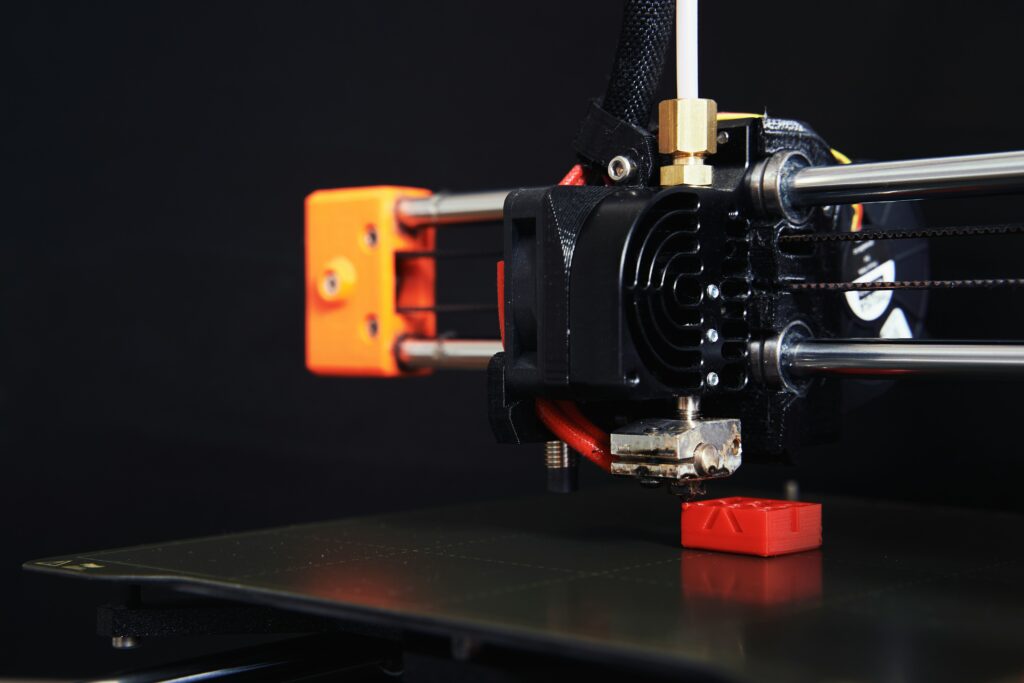
At some point, almost every 3D printing hobbyist runs into the same wall: a model that’s too big for the printer’s build plate, forcing it to be split into pieces and glued back together. Large format and industrial 3D printers exist to solve exactly that problem — but the jump from a desktop printer to something genuinely large comes with real tradeoffs in cost, space, and complexity. Here’s what “large format” actually means in 2026, how these printers work, and what to consider before buying one.
What Counts as a “Large Format” 3D Printer?
There’s no single official definition, but in practice, “large format” for desktop and prosumer FDM printers generally starts around build volumes of 300mm cubed and goes up from there — with genuinely large consumer-facing machines reaching 400-500mm on each axis. Beyond that, true industrial systems can have build volumes exceeding a cubic meter, operating in an entirely different category of cost and scale.
For most hobbyists and small businesses, the practical question isn’t “how big can a printer possibly be” but “how big does my printer need to be to stop splitting models into pieces.” A surprisingly common trigger for upgrading to a large format printer is exactly that: modeling something like a cosplay helmet, only to have slicing software say it needs to be split into five or six pieces — turning what should be a clean, seamless print into hours of gluing and seam-filling afterward.
CoreXY: Why It Matters at Larger Sizes
If there’s one technical term that comes up constantly in large format 3D printer discussions, it’s CoreXY — a motion system design that becomes increasingly important as build volume increases.
In a traditional “bed slinger” design (common on many entry-level printers), the print bed itself moves back and forth on one axis while the print head moves on the other. This works fine at smaller sizes, but as the bed gets larger and heavier, moving that mass back and forth at speed introduces vibration and ringing artifacts — visible wavy patterns on print surfaces, especially on taller prints.
CoreXY printers solve this by keeping the bed largely stationary (it typically only moves on the Z-axis, raising and lowering), while the print head itself moves across both the X and Y axes via a belt-driven system. Because the print head is lighter than a full bed assembly, this allows for higher speeds and better print quality at large sizes without the same vibration issues. For any large format printer, CoreXY kinematics are generally considered the better choice — the larger the build volume, the more this advantage compounds.
Enclosed vs. Open-Frame: What Changes at Large Sizes
Enclosures matter for any printer working with temperature-sensitive materials, but the stakes go up at large format scale. A fully enclosed large format printer can maintain consistent ambient temperature across a much bigger print area, which is critical for materials like ABS, ASA, and nylon that are prone to warping if cooled unevenly. Acrylic panel enclosures are common on large format machines specifically to expand material compatibility beyond PLA and PETG.
Open-frame large format printers exist too, and can be more affordable for a given build volume — but they’re generally better suited to PLA and PETG prints, or to workshops where ambient temperature is already well-controlled. For ABS, ASA, or nylon at large scale, most 2026 buying guides treat an enclosure as close to non-negotiable.
Build Volume Tiers: What You Get at Each Level
| Build Volume Range | Typical Use Case |
| Up to 250mm cubed | Standard desktop printers – most hobbyist projects, small to medium prints |
| 300-400mm cubed | Entry-level “large format” – oversized prototypes, larger props, multi-part assemblies that can now print in fewer pieces |
| 400-500mm cubed | Consumer-grade “large format” ceiling – full-size cosplay helmets, large furniture components, sizable architectural models |
| 1 cubic meter and above | True industrial scale – production manufacturing, large structural components, often using pellet-fed extrusion rather than filament spools |
At the very top end, industrial large format printers priced at $30,000 and above represent a fundamentally different category — built for 24/7 production operation rather than occasional large prints. These systems often use pellet-fed extrusion, which can cut material costs dramatically (by some estimates, up to 10 times lower than spooled filament) for high-volume production.
Preventing Warping on Large Prints
Warping becomes a much bigger problem as print size increases, since larger flat areas have more surface area to contract unevenly as they cool. The core levers for preventing it are consistent across printer sizes, but matter more at scale:
- Bed surface: A textured PEI plate, kept clean, provides better adhesion than many alternative bed surfaces
- Bed temperature: Roughly 60°C for PLA, 80°C or higher for PETG, and 100°C or higher for ABS – getting this right for the specific material is one of the most important factors
- Eliminating drafts: Any airflow across a large print bed can cause uneven cooling, which is part of why enclosures matter so much for large prints in materials prone to warping
- Slowing the first few layers: Reducing print speed for the first 3-5 layers maximizes first-layer adhesion before the rest of the print builds on top of it
Multi-Material and Multi-Color at Large Scale
Several large format printers now include automatic multi-material systems — essentially larger versions of the filament-swapping systems found on smaller multi-color printers, holding multiple spools and switching between them automatically. At large format scale, this opens up genuinely useful applications: printing a large prop with support material in a different (often water-soluble) material for easy removal, or producing large multi-color signage and models without manual filament swaps partway through a long print.
Dual extruder setups serve a similar purpose for some large format machines — particularly useful for printing complex geometries that benefit from water-soluble support material, which would otherwise be difficult or impossible to remove cleanly from an intricate, large-scale part.
Speed Considerations
Large format CoreXY printers are often marketed around very high theoretical speeds — numbers like 600-700mm/s come up frequently in 2026 product listings. In practice, most large format prints are run at considerably lower speeds (often in the 250-400mm/s range) to maintain print quality, with the higher theoretical numbers more relevant for quick draft prints or specific use cases where surface finish matters less than turnaround time.
The practical takeaway: a large format printer’s headline speed figure is less important than how it performs at the speeds you’ll actually use for finished-quality large prints — something that’s worth checking in reviews rather than relying on spec sheets alone.
Who Actually Needs a Large Format Printer?
Large format printers make the most sense for a specific set of use cases: cosplay and prop makers building full-size helmets or armor pieces, architects and designers working with large-scale models, engineers prototyping sizable components, and small businesses producing large signage, furniture components, or similar oversized items.
For most hobbyists working on typical desktop-scale projects – toys, organizers, fidgets, small figures – a large format printer represents a significant jump in cost, footprint, and often complexity without a corresponding benefit, since the vast majority of popular print designs are sized for standard desktop build volumes. The decision to go large format tends to be driven by a specific recurring need (regularly printing oversized objects) rather than a general desire for “more printer.”
What Large Format Printers Actually Cost
Pricing for large format 3D printers spans an unusually wide range, and the jump between tiers isn’t always intuitive. Consumer large format machines in the 400-500mm range have become considerably more accessible, with several well-reviewed options landing in the roughly $1,000-$1,500 range as of 2026 – a price point that would have been associated with much smaller build volumes just a couple of years earlier.
Stepping up to fully enclosed, prosumer-grade large format printers with features like automatic multi-material systems, quick-swap nozzles, and AI-assisted error detection generally moves the price into the $2,000-$3,000 range. Beyond that, dedicated industrial large format systems – the kind built by manufacturers like BigRep, aimed at businesses rather than hobbyists – jump dramatically, with enclosed dual-extrusion machines often priced from $8,000 well into six figures depending on build volume and capability.
At the very top of the market, industrial systems designed for continuous production use (rather than occasional large prints) start around $30,000 and scale upward from there, often using pellet-fed extrusion systems designed for 24/7 operation rather than the spooled filament used by virtually every printer below that tier.
The Large Format Printer Landscape in 2026
The large format category has grown considerably more competitive in 2026, with several manufacturers now offering machines specifically marketed around large build volumes rather than treating size as an afterthought on an otherwise standard desktop design. CoreXY large format printers with build volumes around 350-400mm have become particularly common in the prosumer space, often pairing the larger bed with features inherited from smaller flagship models – automatic bed leveling, enclosed designs, and multi-material filament systems.
At the consumer ceiling, machines reaching 500mm cubed (sometimes described as needing ‘a forklift to move’ in reviews, only half-jokingly given their size and weight) represent the largest build volumes most individual buyers will encounter, typically using CoreXY motion to keep speeds reasonable despite the scale. These machines are frequently positioned as the practical endpoint for hobbyists and small businesses before the conversation shifts entirely into industrial, business-oriented equipment with correspondingly industrial pricing.
For shops or studios running multiple large format printers simultaneously – print farms, in industry terminology – the considerations shift again, toward fleet management, remote monitoring, and ensuring consistent results across multiple machines rather than optimizing any single printer’s capabilities. This is a meaningfully different problem than choosing a single large format printer for individual use, and tends to involve dedicated software and workflow tooling beyond what comes with any individual machine.
Frequently Asked Questions
What build volume counts as a “large format” 3D printer?
There’s no official cutoff, but consumer large format printers generally start around 300mm cubed, with the largest consumer-facing machines reaching 400-500mm per axis. True industrial systems can exceed 1 cubic meter.
What is a CoreXY 3D printer, and why does it matter for large prints?
CoreXY is a motion system where the print bed stays mostly stationary while the print head moves across both the X and Y axes via belts. This reduces vibration compared to traditional ‘bed slinger’ designs, which becomes increasingly important as build volume (and bed mass) increases.
Do large format 3D printers need to be enclosed?
For PLA and PETG, an enclosure is less critical. For ABS, ASA, nylon, and other materials prone to warping, most guides treat a full enclosure as close to essential at large format scale, since it maintains consistent temperature across a much larger print area.
How do I prevent warping on large 3D prints?
The main factors are bed surface (a clean, textured PEI plate works well), correct bed temperature for the material, eliminating drafts (an enclosure helps significantly), and slowing down the first few layers to maximize initial adhesion.
Is a large format 3D printer worth it for hobbyists?
It depends on what you print. If oversized projects (cosplay props, large models, furniture components) are a regular need, a large format printer solves a real problem. For typical desktop-scale prints, the added cost, footprint, and complexity usually outweigh the benefit.
How much does a large format 3D printer cost?
Consumer large format printers (around 400-500mm build volumes) often fall in the $1,000-$1,500 range, with enclosed prosumer models featuring multi-material systems typically running $2,000-$3,000. Dedicated industrial large format systems start considerably higher, often from $8,000 into six figures depending on capability, while continuous-production industrial equipment starts around $30,000 and scales upward.
Final Thoughts
Large format 3D printing in 2026 spans an enormous range – from consumer machines with 400-500mm build volumes that solve the ‘my model needs to be split into pieces’ problem, all the way up to industrial systems built for round-the-clock production. CoreXY motion systems and enclosures aren’t just nice-to-have features at this scale; they’re often the difference between a large format printer that actually delivers good results and one that just has a bigger build plate. For anyone considering the jump, matching the printer’s capabilities to a genuine, recurring need for larger prints – rather than buying based on build volume numbers alone – tends to lead to the better outcome.