
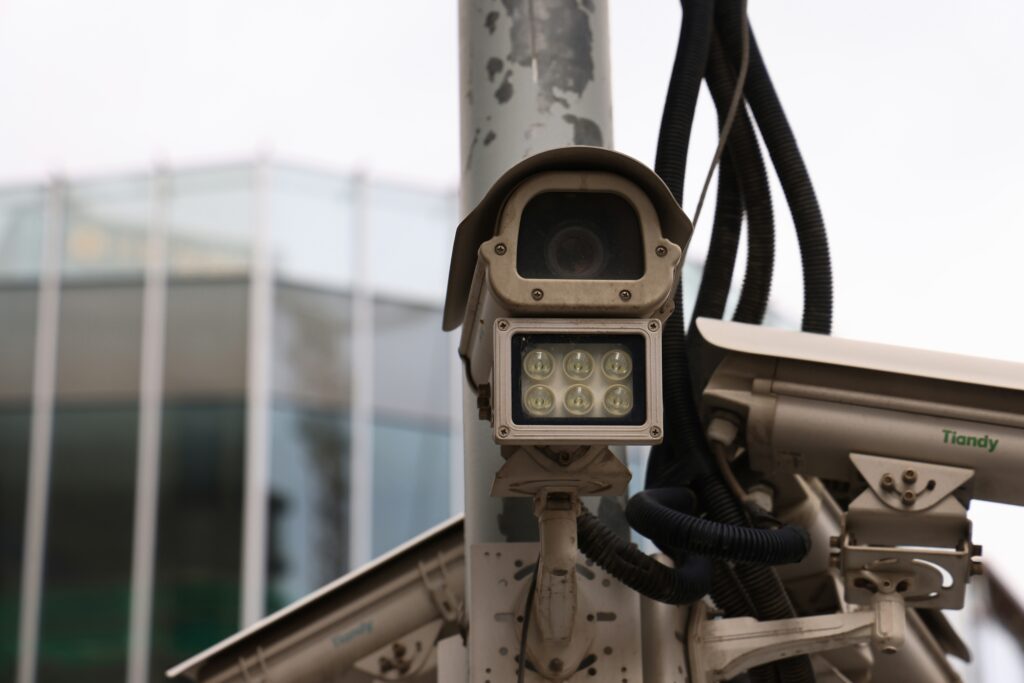
License plate recognition (LPR) camera systems have moved from specialized law enforcement hardware into mainstream use across neighborhoods, campuses, parking facilities, and commercial properties. The market spans from sub-$1,000 standalone cameras to enterprise subscription platforms costing hundreds of thousands annually. This guide covers the major LPR system providers, what each is best suited for, verified pricing where available, and the different deployment models from fixed infrastructure to mobile vehicle-mounted systems.
What Is an LPR Camera System?
An LPR (License Plate Recognition) camera system — also called ALPR (Automatic License Plate Reader) or ANPR (Automatic Number Plate Recognition, the UK/international term) — combines specialized camera hardware with optical character recognition (OCR) software to automatically identify and log license plate numbers. A complete system typically includes:
- Camera hardware: Specialized cameras with dual IR and color lenses, high shutter speeds to eliminate motion blur, and processing hardware
- OCR/recognition software: On-camera or server-based software that converts the captured plate image into a text string
- Database and alerting: A backend system that compares captured plates against hotlists (stolen vehicles, warrants, BOLO lists) and generates alerts on matches
- Data storage and access: Cloud or local storage of plate reads with timestamp, location, and image; accessible through web or mobile interfaces
Modern systems can process vehicles moving at highway speeds, operate in complete darkness using IR illumination, and achieve read accuracy rates of 97% or higher under good conditions.
Flock Safety: Community and Law Enforcement LPR
Flock Safety is the fastest-growing LPR provider in the US market, particularly dominant in the residential community, HOA, and municipal law enforcement segments. Atlanta-based, Flock operates on a subscription lease model — customers pay annually and do not own the hardware. Cancel the subscription and the cameras come down.
Flock Safety Products
| Product | Description |
| Falcon LPR Camera | Standard LPR; solar + LTE; most widely deployed; optimized for two-lane roads and driveways |
| Sparrow | Lighter LPR for residential and low-volume locations |
| Condor PTZ | Pan-tilt-zoom video camera for parking lots, intersections, large open areas |
| Condor Bullet | Fixed video with longer range; for building perimeters and corridors |
| Raven | Audio detection for gunfire, street takeovers, car accidents |
| Mobile Security Trailers | Towable units with camera/LPR for events, construction sites, temporary deployments |
| Flock Nova | Data integration and intelligence platform; analytics |
Flock Safety Pricing 2026
Flock Safety does not publish retail pricing publicly — quotes are provided per deployment. However, public procurement records and city council memos provide verified pricing data:
- Flock Falcon per-camera annual subscription: $2,500–$3,000/year (Vero Beach, FL reported $3,000/camera in 2026; baseline is $2,500)
- Installation fee: $250–$350 one-time per camera
- Price history: Flock raised pricing by approximately $500/camera/year on January 1, 2024 per a Village of Grafton, WI council document
- What’s included: Professional installation, ongoing maintenance, repairs, automatic hardware and software upgrades, platform access (search, real-time alerts, mobile app), footage hosting, customer success support
- What’s not included: Poles, electrical work where needed, permits (can significantly add to project cost at city scale)
Real contract costs from public records:
| Deployment | Contract Total | Notes |
| Beaumont, CA | $225,900 over 2 years | 36 cameras; $117,900 year 1, $108,000 year 2 |
| 30-camera commercial campus | $80,000–$120,000 year 1 | Includes poles, electrical, permits; estimated |
| 2-camera HOA | ~$5,000/year | ~$15,000 over 3 years per PLACA.AI analysis |
| Lynnwood, WA | $38,453.50 (terminated) | Contract terminated by city council February 2026 |
Public sector buyers should use cooperative purchasing contracts — OMNIA Partners, TIPS, BuyBoard, or Sourcewell — for a 4–5% discount and pre-negotiated terms.
Flock Safety in Florida, Ohio, and Georgia
Flock Safety has significant deployments across the Sun Belt and Midwest. In Florida specifically, the state has been one of the most active Flock deployment regions — municipalities from Miami-Dade County to small cities like Vero Beach have active Flock networks. In Ohio and Georgia, community deployments (HOAs, residential neighborhoods, school districts) are among the most common use cases. Flock operates a national LPR network connecting all its cameras — plate reads captured by any Flock camera can be shared across participating agencies, creating a nationwide coverage footprint.
Vigilant Solutions / Motorola LPR
Vigilant Solutions is the dominant LPR provider for law enforcement agencies in the United States. Acquired by Motorola Solutions, Vigilant’s products form a core part of Motorola’s public safety portfolio. The platform is built specifically for law enforcement use cases.
Vigilant Key Products
- Fixed LPR: Ruggedized dual-lens (infrared and color) camera with integrated processing. Reads plates in the camera’s field of view and matches against agency hotlists. Supports ONVIF secondary video stream for integration with VMS platforms. Single Power-over-Ethernet connection for simplified deployment
- Mobile LPR (L5M system): High-definition L5M cameras (1–4 cameras per vehicle) with GPS unit and Car Detector Mobile (CDM) software. Lens options from 6mm to 25mm for different operating distances. Provides real-time field intelligence to officers on patrol
- LEARN platform: Vigilant’s cloud-based law enforcement analytics network. Captures, stores, and analyzes LPR data. Target Alert Service broadcasts alerts from fixed or mobile camera sightings to any connected computer or mobile device. Enables cross-agency data sharing
Vigilant pricing is enterprise/government procurement only — no public retail pricing. Systems are sold through authorized law enforcement technology resellers and Motorola Solutions’ direct sales teams. DRN (Digital Recognition Network), a sister company within the Motorola ecosystem, operates the commercial ALPR data network used by repo companies and auto finance industry clients.
Axis Communications: Enterprise LPR Cameras
Axis Communications is the world’s leading IP camera manufacturer and offers dedicated LPR cameras and software for enterprise and infrastructure deployments. Unlike Flock (subscription platform) or Vigilant (law enforcement vertical), Axis sells hardware and software components that integrators and end users deploy in their own environments.
Axis LPR Products
- AXIS Q1700-LE License Plate Camera: Long-range LPR camera designed for highways, toll plazas, and high-speed capture. Dual capture (simultaneous IR and color). Engineered for challenging low-light conditions. The Q1700-LE is Axis’s flagship dedicated LPR camera for infrastructure-grade deployments
- AXIS License Plate Verifier: An AXIS Camera Application (ACA) that runs directly on compatible Axis cameras, enabling on-camera LPR processing without an external server. Works with cameras including the AXIS P3245-V and others that support the app platform. Outputs plate reads to access control systems, gates, parking management software, or third-party platforms
- AXIS P1448-LE: Multi-sensor panoramic camera with LPR-compatible configurations for parking and perimeter monitoring
Axis cameras are sold exclusively through a global network of authorized resellers and system integrators — not through direct retail. Pricing for Axis LPR-specific cameras typically ranges from several hundred to several thousand dollars per unit, with the Q1700-LE at the higher end of the range. Contact an Axis authorized distributor for current pricing.
AXIS ANPR and access control integration: The Axis License Plate Verifier application enables license plate-based access control — a gate, barrier arm, or door releases when a recognized plate is captured. This is particularly popular for parking garages, gated communities, corporate campus access, and loading dock management.
Hikvision and Dahua: High-Volume LPR Hardware
Hikvision and Dahua are the two largest IP camera manufacturers globally by volume, both based in China. They offer extensive LPR camera product lines at significantly lower hardware price points than Axis, Flock, or Vigilant. However, a critical compliance note applies:
Both Hikvision and Dahua are on the FCC’s Covered List under the Secure Equipment Act and related rules. Federal agencies, state and local agencies that receive federal funding for security purposes, and contractors operating on federal infrastructure cannot purchase Hikvision or Dahua equipment under these restrictions. For purely commercial and private sector deployments (not federally funded), these restrictions do not apply.
| Camera | Price | Notes |
| Dahua ITC413-PW4D-Z1 | $742.75 | Varifocal lens, high-resolution imaging; popular commercial LPR option |
| IPLPR-EL4IR30Z5X-AI | $1,127.37 | 4MP, 98ft IR range; AI-enhanced recognition |
| Hikvision DS-TMG series | ~$300–$2,000 | Range of LPR models; check model numbers for capabilities |
For private parking lots, retail, residential developments, and commercial properties not under federal funding restrictions, Hikvision and Dahua provide capable LPR at substantially lower hardware costs than Axis. Integration with open-source ANPR software (OpenALPR, Plate Recognizer) or commercial ANPR software platforms can deliver a complete system at a fraction of the cost of a Flock or Vigilant deployment.
Mobile LPR Camera Systems
Mobile LPR — cameras mounted on vehicles that scan plates continuously while driving — serves several distinct markets:
Law Enforcement Mobile LPR
Police departments use vehicle-mounted LPR to scan multiple lanes simultaneously while on patrol, checking every passing plate against hotlists in real time. Vigilant’s L5M system (up to 4 cameras per vehicle) is the dominant platform. Systems provide real-time alerts, automatic incident logging, and integration with LEARN for data sharing across agencies.
Repo and Auto Finance Mobile LPR
Repossession companies use vehicle-mounted LPR to locate vehicles subject to repossession orders. DRN (Digital Recognition Network, a Motorola subsidiary) operates the largest commercial ALPR network in the US, with data contributed by repo agents and tow companies and accessed by auto finance companies and lenders to locate collateral. A typical repo ALPR mount includes 2-4 cameras on a pickup truck or flatbed, scanning plates continuously on public roads and parking lots. Cameras are sourced from various manufacturers; DRN provides the software platform.
Mobile LPR Trailers
For temporary deployments — construction sites, events, perimeter monitoring — mobile LPR trailers provide a self-contained unit on a towable platform. Flock Safety offers mobile security trailers. Various third-party manufacturers produce towable LPR trailer units. These typically include solar or generator power, cellular connectivity, and onboard storage.
LPR for Parking Management
Parking management is one of the fastest-growing LPR applications. License plate-based parking systems replace traditional ticketing, RFID transponders, or barcode stickers with automated plate capture at entry and exit:
- Pay-by-plate: Parkers enter their plate number at pay stations; enforcement cameras verify payment compliance
- Automated entry/exit: Cameras at garage entry and exit gates release the barrier arm when a registered or paid plate is detected — no ticket, no transponder needed
- Permit verification: University lots, employee parking, resident zones — authorized plates are pre-registered and camera systems enforce permit requirements automatically
- Enforcement: LPR-equipped parking enforcement vehicles or fixed cameras scan lots and flag vehicles without valid payment or permits
LPR parking management vendors include T2 Systems, Passport, SKIDATA, ParkHub, and HUB Parking Technology. Camera hardware in these systems is typically from Axis, Dahua, Hikvision, or purpose-built parking LPR vendors. An advanced LPR system for a parking facility typically runs $5,000–$15,000 per lane for owned hardware, or can be lower under a SaaS subscription model.
Solar and Portable LPR Systems
Solar-powered LPR cameras — exemplified by Flock’s Falcon — have significantly expanded where fixed LPR can be deployed. By eliminating the need for electrical trenching, solar systems can be installed in days rather than months and at locations where running power would be cost-prohibitive.
Key characteristics of solar LPR deployments:
- Solar + cellular (LTE/5G): The camera charges from solar panels and transmits data over cellular — no wired infrastructure required beyond a mounting pole
- Battery backup: Onboard battery provides operation through cloudy periods or overnight
- Rapid deployment: Professional installation measured in hours rather than weeks
- Flexible siting: Can be positioned at any outdoor location with adequate solar exposure
Portable (non-solar) handheld LPR devices are available for parking enforcement officers and event security — these are battery-powered units that capture plates on-demand rather than continuously. Pricing ranges from $500 to $3,000+ for handheld units. Genetec AutoVu ThruWay is one enterprise-grade option; various lower-cost options exist for parking enforcement applications.
LPR System Cost Summary
| System Type | Typical Cost Range | Notes |
| Flock Safety Falcon (subscription) | $2,500–$3,000/camera/year | Does not include poles, electrical, permits at city scale |
| Standalone fixed LPR camera (Dahua/Hikvision) | $742–$2,000/camera (hardware) | Requires separate software, server, integration; lower per-camera hardware cost |
| Axis LPR camera (enterprise) | $1,000–$5,000+/camera (hardware) | Higher build quality; sold through integrators only |
| Vigilant/Motorola mobile LPR | Enterprise procurement pricing | Contact Motorola Solutions resellers for quotes |
| Parking management LPR (per lane) | $5,000–$15,000/lane (owned) | Full system including hardware, software, integration |
| Handheld/portable LPR | $500–$3,000 | For parking enforcement and event security |
| 30-camera city deployment (Flock) | $80,000–$225,000+ year 1 | Includes installation, poles, permits; based on real contracts |
Frequently Asked Questions
How much does a Flock Safety camera cost?
The Flock Safety Falcon LPR camera costs approximately $2,500 per camera per year under the standard subscription, plus a one-time installation fee of $250–$350. Some 2026 deployments have reported $3,000/camera/year. This is a lease model — hardware is owned by Flock. The subscription includes installation, maintenance, upgrades, and platform access.
What is Vigilant LPR?
Vigilant LPR is a law enforcement license plate recognition platform owned by Motorola Solutions. It offers fixed LPR cameras, vehicle-mounted mobile LPR systems (up to 4 cameras per vehicle), and the LEARN cloud analytics platform. Vigilant is the dominant LPR provider for US police departments. Pricing is enterprise/government procurement only through Motorola Solutions resellers.
What is the best LPR camera for business?
For subscription-based community and commercial deployments, Flock Safety is the most complete turnkey option. For owned hardware integrations, Axis Communications offers enterprise-grade LPR cameras with strong integration capabilities. For cost-sensitive deployments not subject to federal procurement restrictions, Dahua and Hikvision offer capable LPR hardware at significantly lower per-camera costs.
What is an LPR trailer?
An LPR trailer is a self-contained, towable unit housing LPR cameras, solar or generator power, and cellular connectivity — deployable at any location without permanent installation. Used for temporary security at events, construction sites, and high-crime areas. Flock Safety offers mobile security trailers; various third-party manufacturers produce similar units.
Can I use LPR cameras for repo work?
Repo companies use vehicle-mounted LPR systems to locate vehicles subject to repossession. DRN (Digital Recognition Network, a Motorola subsidiary) is the dominant platform for commercial repo ALPR. Camera hardware is mounted on tow trucks and flatbeds; software matches plates against lender repossession lists and logs plate read locations for recovery agents.
Are Hikvision LPR cameras legal to buy?
Hikvision cameras are legal for private commercial and residential purchase in the United States. Federal agencies and entities that receive federal security funding cannot purchase Hikvision under FCC Covered List restrictions. For private businesses, universities not under federal security grants, and commercial properties, Hikvision LPR cameras are legally available.
Final Thoughts
The LPR camera market in 2026 has stratified into three distinct tiers: subscription platforms (Flock Safety) that include everything at a predictable annual cost but no hardware ownership; enterprise hardware (Axis, Vigilant/Motorola) sold through integrators for organizations that want ownership and control; and volume hardware (Dahua, Hikvision) for cost-sensitive commercial deployments with appropriate compliance check on federal restrictions. The right choice depends on the deployment context, budget structure (OpEx subscription vs CapEx ownership), required integration with existing systems, and whether the use case is law enforcement, community safety, parking management, or commercial access control. For most small-to-medium community deployments, Flock’s subscription model wins on simplicity and speed of deployment. For larger organizations that want system ownership and deeper integration flexibility, Axis or purpose-built LPR hardware through a systems integrator is typically the better long-term value.