No crane. No scaffold. No gravity. And a budget of over $150 billion.
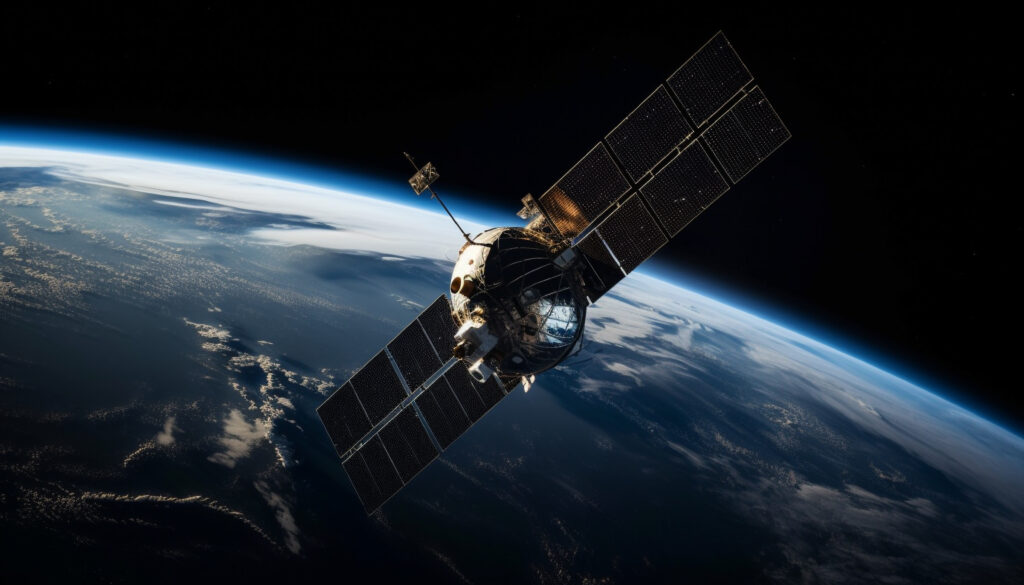
The International Space Station was assembled entirely in orbit, 250 miles above Earth, over 13 years — from the launch of its first module in 1998 to the final configuration in 2011. It required 42 assembly flights, over 200 spacewalks, and the coordination of five space agencies from 15 countries.
It remains the most complex construction project in human history. Here’s exactly how they did it.
In this guide you’ll also find: why the first two modules were from rival nations during the Cold War’s aftermath, what the ‘Russian brick incident’ was really about, and what happens to the ISS when it’s decommissioned in 2030.
The ISS at Build Completion: Key Numbers
| Spec | Number |
| Construction period | 1998–2011 (13 years) |
| Assembly launches | 42 flights |
| Spacewalks for assembly | More than 200 |
| Total modules | 16 pressurized modules |
| Total mass | ~420,000 kg (925,000 lbs) |
| Length | 357 feet (109 meters) |
| Width (solar array span) | 240 feet (73 meters) |
| Total cost (to 2026) | Over $150 billion |
| Partner space agencies | NASA, Roscosmos, ESA, JAXA, CSA |
| Countries involved | 15 |
Why Build in Space? Why Not Launch It Complete?
The ISS at full size is roughly equivalent to a football field. No rocket ever built — not Saturn V, not the Space Shuttle, not Falcon Heavy — could launch anything close to that size in one piece.
The solution was modular assembly. Engineers designed the station as a series of separate modules, each small enough to fit inside a launch vehicle fairing, that would be connected together in orbit. Each module was a self-contained pressurized unit that could be attached to the growing structure by robotic arms and spacewalking astronauts.
This approach had never been attempted at this scale. Every joint, every connection, every cable run had to work perfectly in the vacuum of space, in extreme temperature swings, with no ability to return to a workbench if something went wrong.
The First Two Modules: Cold War Rivals in Orbit Together
The construction of the ISS began with a geopolitically remarkable choice: the first two modules were launched by the two nations that had just spent 40 years threatening each other with nuclear weapons.
Zarya — November 20, 1998 (Russia)
The first module was Zarya (Russian for ‘Dawn’), a Russian-built Functional Cargo Block launched on a Russian Proton rocket from Baikonur Cosmodrome in Kazakhstan. Zarya provided initial power, propulsion, and communications for the early ISS. Technically, it was built by Russia but funded by the United States — a deliberate choice to keep Russia’s aerospace industry occupied and its engineers employed after the Soviet collapse.
Unity — December 4, 1998 (USA)
Two weeks after Zarya launched, the Space Shuttle Endeavour carried Unity (Node 1) — the first American-built module — into orbit. During STS-88, astronauts conducted three spacewalks to connect Unity to Zarya, making the first physical join of what would become the ISS. The two modules were connected December 6, 1998.
This pairing — Russian propulsion and American connecting node — established the fundamental pattern of the ISS: international interdependence. Neither side could operate the station without the other.
How Modules Were Attached in Orbit: The Mechanics
Building the ISS required solving a problem nobody had ever solved before at this scale: how do you assemble massive structures in zero gravity, in a vacuum, while traveling at 17,500 mph?
The answer involved three main techniques:
1. Robotic Arms
The Space Station Remote Manipulator System (SSRMS) — popularly called Canadarm2 — is a 17.6-meter robotic arm attached to the ISS. It can move modules weighing up to 116,000 kg by ‘inchworm-ing’ along the station’s exterior using attachment points called Power and Data Grapple Fixtures. Canadarm2 performed most of the heavy lifting during ISS assembly, moving modules and components from the cargo bays of visiting spacecraft into position.
2. Spacewalks (EVAs — Extravehicular Activities)
Robotic arms could position modules precisely but couldn’t make the final connections — bolting flanges together, connecting power cables, routing data lines, installing thermal covers. That required human hands. Over 200 spacewalks were performed during ISS assembly, totaling thousands of hours of work in the vacuum of space. Astronauts working in bulky pressurized suits, with limited dexterity, connected the plumbing, electrical, and structural systems that hold the station together.
3. Automated Docking
Some Russian modules used automated docking systems — approaching the station under computer control and physically docking without astronaut intervention. Russian Soyuz and Progress spacecraft still use this approach for crew and resupply missions today.
The Assembly Sequence: Key Milestones
| Year | Module / Milestone | What It Added |
| 1998 | Zarya (Russia) | First module — power, propulsion, comms |
| 1998 | Unity/Node 1 (USA) | First US module; connected to Zarya |
| 2000 | Zvezda (Russia) | Living quarters, life support; enabled first crew |
| 2000 | First crew arrives (Nov 2) | ISS becomes permanently inhabited |
| 2001 | Destiny (USA) | Primary US science laboratory |
| 2001 | Canadarm2 installed | Robotic arm enables further assembly |
| 2001 | Airlock Quest (USA) | Allows US-side spacewalks without Shuttle docked |
| 2007 | Harmony/Node 2 (USA/Europe) | Connecting port for Columbus and Kibo labs |
| 2008 | Columbus (ESA/Europe) | European science laboratory |
| 2008 | Kibo (JAXA/Japan) | Largest single module; Japanese experiment facility |
| 2009 | Tranquility/Node 3 (USA) | Life support, treadmill, cupola attachment point |
| 2010 | Cupola (ESA/Europe) | 7-window observation dome; iconic view module |
| 2011 | Final configuration reached | Construction officially complete |
The Cupola: The ISS’s Most Famous Room
Attached to the Tranquility module in 2010, the Cupola is a seven-window observation dome that looks like something from science fiction. It provides a 360-degree panoramic view of Earth, space, and the station itself.
It is one of the most photographed locations in space — virtually every iconic ISS photograph of Earth taken from the station comes from the Cupola’s windows. The windows are the largest ever used in space and are made of fused silica and borosilicate glass, each protected by a debris shield.
Astronauts eat meals here, conduct media appearances here, and many have described it as the most psychologically valuable space on the station — a place where the reality of orbiting Earth at 17,500 mph becomes visually immediate.
What Is Each Module for? A Room-by-Room Guide
The Russian Segment
The Russian segment — Zarya, Zvezda, Poisk, Rassvet, Nauka, and Prichal — forms one end of the ISS. Zvezda serves as the primary Russian crew quarters and life support, and also provides the main reboost engines that periodically raise the ISS’s orbit to counteract atmospheric drag. Nauka (meaning ‘Science’), launched in 2021, added a new Russian laboratory and was notable for an incident where its thrusters accidentally fired after docking, causing the entire station to rotate 540 degrees before being corrected.
The US Orbital Segment
The American side includes Destiny (the primary US science laboratory), Harmony (Node 2, the central connecting hub for Columbus and Kibo), Tranquility (Node 3, housing life support and the Cupola), Serenity (the Bishop Airlock, added commercially in 2021), and the truss structure holding the massive solar arrays. The US segment contributes most of the station’s power generation, with eight large solar array wings generating about 120 kilowatts.
Columbus (European Space Agency)
The European laboratory module Columbus was launched in February 2008 and provides over 2,500 liters of pressurized volume for scientific experiments. It has conducted thousands of experiments in biology, fluid physics, materials science, and Earth observation. External payloads can be attached to the outside of Columbus for direct exposure to the space environment.
Kibo (Japan Aerospace Exploration Agency)
Kibo is the largest single module on the ISS — a Japanese laboratory with a pressurized module, an exposed exterior facility for external experiments, and a small airlock for deploying small satellites. JAXA launched Kibo in three separate pieces between 2008 and 2009, with each piece assembled in orbit.
The ISS Flags: What They Mean
The ISS displays multiple national flags inside and outside its modules — reflecting the multinational nature of the project. Inside the station, flags of participating nations are prominently displayed in common areas. The Zarya module prominently features the flags of Russia, the USA, and the other partner nations. Each crew member’s sleeping quarters contains the flag of their home country.
The Unity module bears a plaque from the first ISS crew signed by astronauts and cosmonauts from both nations — a deliberate symbol of the partnership that had seemed impossible just a decade earlier during the Cold War.
The First Live Video From Space to the ISS
Communication technology developed alongside the physical assembly of the ISS. Early ISS missions in 2000-2001 used UHF radio and compressed video at relatively low quality. The first high-quality live video feeds from the station improved significantly in the mid-2000s when the Tracking and Data Relay Satellite network was upgraded.
Today, the ISS has conducted live television broadcasts, educational video calls with schools, press conferences, and social media video streams — a far cry from the grainy footage of early Space Shuttle missions.
Near-Disasters During Construction
The 2001 Progress Collision Scare
During the early construction years, a Russian Progress resupply vehicle approaching for docking experienced a navigation system anomaly. The spacecraft briefly threatened to collide with the station before controllers were able to regain control. The incident highlighted the extreme precision required for orbital assembly and resupply operations.
The 2007 Computer Failure
In June 2007, the Russian segment’s primary computer systems failed during a Solar Array Wing installation on the US side. The computers controlled orientation, oxygen generation, and carbon dioxide removal in the Russian segment. For several days the station operated on backup systems while engineers worked frantically to diagnose the problem. The failure was eventually traced to the power systems of the newly installed US solar arrays.
The 2021 Nauka Thruster Incident
When Russia’s long-awaited Nauka module finally docked in July 2021 after years of delays, its thrusters unexpectedly fired several hours after docking — a software error triggered the engines to think they were still in space performing a maneuver. The ISS rotated 540 degrees (one and a half full rotations) before the thrusters burned through their propellant and American thrusters on the docked Cygnus spacecraft counteracted the movement. No crew was injured and no structural damage occurred, but the incident demonstrated how a single software error can affect the entire station.
How the ISS Will Be Deconstructed: The 2030 Plan
The ISS will not be repurposed or abandoned in orbit. The plan is controlled deorbit using a purpose-built US Deorbit Vehicle — a SpaceX-built spacecraft that will attach to the station and perform a series of orbital maneuvers to lower the ISS’s orbit over several months.
The final reentry will be targeted at Point Nemo — the most remote location on Earth, a spot in the South Pacific roughly 1,670 miles from the nearest land. It is already used as a ‘spacecraft cemetery’ — over 200 spacecraft have been deorbited here deliberately. Most of the ISS will burn up during reentry; larger debris will fall into the ocean.
Russia has indicated it may detach its segment before deorbit to form the core of a new Russian orbital station (ROSS). Commercial successors including Axiom Space and Vast’s Haven stations are in development and expected to take over some of the ISS’s scientific role.
Bottom Line
| ✅ Time to build | 13 years (1998–2011) |
| ✅ Launches required | 42 assembly flights |
| ✅ Key technique | Robotic arms + spacewalks + automated docking |
| ✅ Most iconic module | The Cupola — 7-window observation dome |
| ✅ End date | Deorbit into Pacific Ocean, end of 2030 |
Frequently Asked Questions
How was the ISS built in space?
The ISS was assembled module by module in orbit over 13 years using 42 launches. Each module was launched separately and connected using robotic arms (Canadarm2) and spacewalking astronauts. More than 200 spacewalks were performed to make electrical, plumbing, and structural connections between modules.
How many modules does the ISS have?
The ISS has 16 pressurized modules, contributed by the USA (6), Russia (6), Europe/ESA (1 — Columbus), Japan/JAXA (1 — Kibo, though assembled from 3 pieces), and Canada (robotic systems). The modules are connected along a central truss backbone over 350 feet long.
How long did it take to build the ISS?
Construction ran from November 1998 (launch of the first module, Zarya) to 2011 when the final configuration was reached — 13 years. The station was first inhabited in November 2000, while construction was still ongoing.
What is the Cupola on the ISS?
The Cupola is a seven-window observation dome attached to the Tranquility module, added in 2010. It provides a panoramic view of Earth and space and is used for observation, photography, robotic arm operations, and spacecraft docking monitoring. It is the source of most iconic ISS Earth photographs.
What happens to the ISS when it is decommissioned?
The ISS is planned for controlled deorbit at end of 2030 using a SpaceX-built US Deorbit Vehicle. It will be guided into the atmosphere and most will burn up on reentry. Surviving debris will be targeted at Point Nemo in the South Pacific — the most remote ocean location on Earth, used as a spacecraft cemetery.