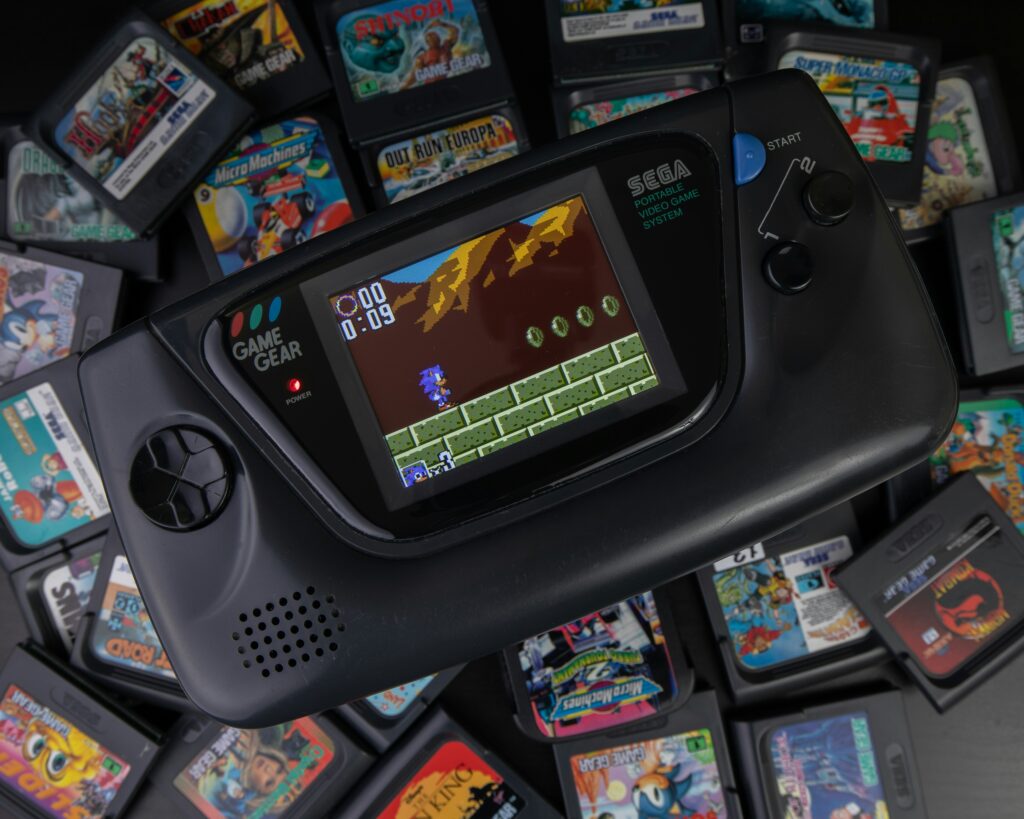
Retro gaming handhelds have moved well beyond simple Game Boy clones. In 2026 you can spend $15 on a budget unit preloaded with thousands of games, $50 on a pocket-sized device that handles everything from NES to PlayStation 1, or $219 on FPGA hardware that recreates the Game Boy at a transistor level. There are Android-powered handhelds capable of running PS2 and GameCube, and officially licensed mini consoles for buyers who want legal cartridge-based libraries.
The market is the richest it has ever been — which also means the wrong choice for your situation is easier to make than ever. This guide breaks everything down by budget, era, and use case so you buy the right device the first time.
Quick Comparison: Every Category at a Glance
| Device / Category | Price | Best For | Max System |
| Sub-$25 budget units | $10-25 | Gifts; kids; casual play | NES / GBA era |
| Miyoo Mini Plus | ~$50 | Best value budget pick | PS1 (reliable) |
| Anbernic RG35XX Plus | ~$40 | Ultra-budget alternative | PS1 (reliable) |
| Anbernic RG353M | ~$90 | Mid-range step-up | N64 / PSP |
| Retroid Pocket Flip 2 | ~$129 | Clamshell; portable | N64 / PS2 (light) |
| Retroid Pocket 5 | ~$149 | PS2 / GameCube era | PS2 / GameCube |
| Anbernic RG Cube | ~$150 | Best overall Android pick | PS2 / DS |
| ModRetro Chromatic | $199/$299 | Game Boy Color purists | GB / GBC only |
| Analogue Pocket | $219.99 | FPGA Game Boy standard | GB/GBC/GBA + cores |
What to Look for in a Retro Handheld Console
Emulation vs. FPGA
Most retro handhelds use software emulation — code that runs on the device’s processor and mimics the behavior of original hardware. Emulation is flexible, supports a huge range of systems, and is what every device under $200 uses. The trade-off: minor input lag on some systems and occasional compatibility quirks with specific games.
FPGA (Field-Programmable Gate Array) devices take a fundamentally different approach. The FPGA chip is reprogrammed to recreate the original hardware at a circuit level — every clock cycle, every audio sample, every pixel generated identically to the original chip. The Analogue Pocket and ModRetro Chromatic use this approach for Game Boy hardware. FPGA devices cost more and support fewer systems, but with near-perfect accuracy for the ones they do support. For Game Boy cartridge collectors, this difference is genuinely noticeable.
Screen Quality
IPS screens offer significantly better color accuracy, brightness, and viewing angles than older TFT displays. Most current handhelds in the $50+ range now use IPS panels. Aspect ratio matters too: a more square aspect ratio (closer to 1:1) suits Game Boy games and vertical arcade shooters well. Wider screens (16:9 or 16:10) suit SNES, Genesis, and later systems better. The Anbernic RG Cube’s square screen is a deliberate design choice that benefits both retro and arcade content.
System Compatibility Ceiling
Different retro systems require different processing power to emulate. This is the single most important factor that budget-first buyers overlook:
| Processing Level | Systems Supported |
| Entry (sub-$50) | NES, Game Boy, SNES, Game Boy Advance, Sega Genesis (reliable) |
| Budget (~$50) | Adds PlayStation 1 (full reliability) |
| Mid-range (~$90) | Adds Nintendo 64, PSP, Dreamcast |
| Upper mid (~$130-150) | Adds PlayStation 2, GameCube (most titles) |
| FPGA ($199-219) | GB/GBC/GBA at circuit accuracy; community cores for NES/SNES/more |
Controls and D-Pad Quality
D-pad quality matters more than most buyers expect before purchase. Retro games were designed around precision D-pad input — platform games, fighting games, and shooters all demand accurate diagonal registration. A poor D-pad creates consistent frustration that no other hardware feature compensates for. Hall-effect joysticks (which use magnetic sensors rather than physical contacts) resist the stick drift that affects most cheaper analog sticks over time and are now a feature on better mid-range and premium devices.
Preloaded Games vs. Your Own Library
Many budget handhelds ship with thousands of preloaded games. This sounds compelling but the quality is highly variable — large preloaded libraries frequently include ROM hacks, duplicates, region variants counted separately, and lower-quality homebrew titles that inflate the number. The hardware quality (screen, D-pad, battery life) matters more for long-term satisfaction than the raw preloaded game count. Enthusiast-focused devices ship with minimal content and instead support microSD cards with your own curated library.
Best Overall Retro Handheld: Anbernic RG Cube (~$150)
Among current Android-based retro handhelds, the Anbernic RG Cube is the strongest all-around pick for buyers who want maximum compatibility without going into the premium $200+ FPGA tier. Its most distinctive feature — a square touchscreen display — is a practical advantage, not just a visual choice: Game Boy games, arcade shooters, and NES games all fill the square screen correctly where they would letterbox on a widescreen device.
| Spec | Detail |
| Display | Square IPS touchscreen; excellent color accuracy |
| Processor | Unisoc T618 (Android) |
| RAM | 4GB |
| OS | Android 11 |
| Analog sticks | Hall-effect (magnetic; no drift) |
| Connectivity | Bluetooth; WiFi; USB-C video output |
| Strong systems | NES through PS2; Nintendo DS; most Dreamcast |
| Storage | microSD expansion |
The hall-effect joysticks, Bluetooth, WiFi, and USB-C video output round out a feature set that covers almost every retro gaming use case. The square aspect ratio is the detail that pushes it above competitors at this price — for buyers who play a mix of Game Boy, NES, arcade, and SNES titles, the RG Cube’s display handles all of them better than any widescreen alternative.
Best Budget Retro Handheld: Miyoo Mini Plus (~$50)
The Miyoo Mini Plus is the most frequently recommended entry-level retro handheld in 2026, and for good reason. At approximately $50-55, it handles everything from NES and SNES through Game Boy Advance and PlayStation 1 without frame drops or audio issues. The 3.5-inch IPS display is bright and sharp. The build is plastic but solid enough for daily carry.
The device’s real strength comes from its community. OnionOS — a free firmware replacement developed and maintained by the Miyoo community — transforms the experience significantly compared to the stock software. It adds a clean launcher, improved emulator cores, RetroAchievements support, save state management, WiFi-based scraping for box art, and theme customization. Installing OnionOS takes approximately 20 minutes and is the standard first step for every new Miyoo owner.
| Spec | Detail |
| Display | 3.5-inch IPS; 640×480 |
| Processor | ARM Cortex-A7 @ 1.2GHz |
| RAM | 128MB |
| Battery | 3000mAh; 6-7 hours (SNES); 4-5 hours (PS1) |
| Storage | microSD (not included; 64GB-128GB recommended) |
| Best firmware | OnionOS (free; github.com/OnionUI/Onion) |
| Max system (reliable) | PlayStation 1 |
| Price | ~$50-55 |
The Miyoo Mini Plus fits in a front jeans pocket. Battery lasts a full flight on SNES games. It is the answer to ‘I want to try retro gaming without spending $200.’ Buy it, install OnionOS, and explore.
Best Ultra-Budget Alternative: Anbernic RG35XX Plus (~$40)
For buyers who want to spend even less, the Anbernic RG35XX Plus at approximately $40 provides a similar retro gaming experience to the Miyoo Mini Plus at a slightly lower price. It plays the same systems (NES through PS1 reliably), uses a comparable 3.5-inch IPS display, and benefits from community firmware (Garlic OS and MinUI are the standard replacements for its stock software).
The differences versus the Miyoo Mini Plus: the D-pad is slightly less accurate for precision games, and the community is smaller — fewer custom themes, guides, and firmware updates. For a buyer who purely wants the cheapest possible retro handheld and is comfortable with basic setup, the RG35XX Plus is a legitimate starting point. For anyone who wants the better long-term experience and community support, the $10 premium for the Miyoo Mini Plus is worth it.
Best for Game Boy Authenticity: Analogue Pocket ($219) and ModRetro Chromatic ($199/$299)
For players who own original Game Boy, Game Boy Color, or Game Boy Advance cartridges and want to play them on modern hardware with maximum accuracy, FPGA-based devices are the correct choice. Both the Analogue Pocket and ModRetro Chromatic recreate the original hardware at a circuit level — they are not simulating a Game Boy, they are built to function as one.
Analogue Pocket ($219.99)
The Analogue Pocket plays Game Boy, Game Boy Color, and Game Boy Advance cartridges natively via FPGA. Optional adapters ($30-50 each) add Game Gear, Neo Geo Pocket Color, Atari Lynx, and TurboGrafx-16 support. The openFPGA framework allows community developers to add additional system cores, and cores now exist for NES, SNES, Sega Genesis, Neo Geo, and arcade systems.
The 3.5-inch display at 1600×1440 resolution (615 PPI) is the finest screen on any dedicated retro handheld. The Analogue Dock ($99 sold separately) adds TV output with wireless controller support. The Pocket is frequently backordered at analogue.co — be prepared to wait for restocks.
ModRetro Chromatic ($199 / $299)
The ModRetro Chromatic is the more specialist choice — it plays Game Boy, Game Boy Color, and original Game Boy only. The 2.56-inch display is color-tuned to match original Game Boy Color output specifically. The magnesium alloy shell and PBT polymer buttons give it premium construction. The $299 sapphire crystal display version uses the same material as luxury watches. ModRetro is actively developing new Game Boy Color titles and supporting indie developers for the platform — the Chromatic is a living ecosystem, not just a museum piece.
| Analogue Pocket | ModRetro Chromatic | |
| Price | $219.99 | $199 / $299 (sapphire) |
| Display | 3.5-inch; 1600×1440; 615 PPI | 2.56-inch; 160×144 (GBC accurate) |
| Systems (native) | GB / GBC / GBA | GB / GBC |
| Via adapters | Game Gear, Lynx, TurboGrafx, NGPC | N/A |
| Community cores | NES, SNES, Genesis, Neo Geo, arcade | N/A |
| TV output | Via Analogue Dock ($99) | No |
| Shell material | Plastic (premium quality) | Magnesium alloy |
| New game development | No | Yes — active ModRetro titles |
| Choose if… | You want multi-system FPGA + big display | You want the best GB/GBC experience specifically |
Best Mid-Range Retro Handheld: Retroid Pocket Series
The Retroid Pocket line has become the standard recommendation for buyers who want strong emulation performance across a wide system range without going into premium FPGA territory. Both the Pocket 5 and Pocket Flip 2 use the Snapdragon 865 processor with 8GB RAM — enough to handle PS2, GameCube, N64, Dreamcast, and PSP reliably for the majority of popular titles.
Retroid Pocket 5 (~$149)
The Retroid Pocket 5 is the pick for buyers who prioritize display quality. The 5.5-inch OLED panel delivers deep blacks and vibrant colors that make PS2 and GameCube games look excellent — better in many respects than playing on original hardware on a modern TV. Hall-effect analog sticks eliminate the drift that affects cheaper Android handhelds. The Android 11 OS allows full Play Store access, streaming apps, and cloud gaming (Xbox Cloud Gaming, GeForce Now) alongside local emulation.
Retroid Pocket Flip 2 (~$129)
The Retroid Pocket Flip 2 uses the same Snapdragon 865 and 8GB RAM as the RP5, giving identical emulation performance, but in a clamshell (Nintendo DS-style) design. The 4-inch IPS screen is smaller and less vibrant than the RP5’s OLED, but the folding form factor protects the screen without a case and reduces the carry footprint significantly. The Flip 2 is the better choice for travel and commuting. The RP5 is the better choice for home and couch use where the larger OLED display is the main advantage.
Best for Pure Nostalgia: Officially Licensed Mini Consoles and Evercade
Not everyone wants emulation. For buyers who want officially licensed games — no legal grey areas, no setup, no ROM management — the Evercade and Super Pocket lines provide a different but valid retro gaming experience.
Evercade Handheld (~$60-80)
The Evercade uses licensed game cartridges from classic publishers including Atari, Namco, Data East, Interplay, and Bitmap Brothers. Each cartridge packs 10-20 officially licensed games with original ROM data — no emulation compatibility concerns, no piracy questions. The library is curated rather than exhaustive. The Evercade is the best retro handheld for families, for buyers who want complete legal clarity, or for anyone who prefers the physical cartridge model over building a ROM library.
Super Pocket Line
The Super Pocket devices (Taito Edition, Capcom Edition, Atari Edition) are compact officially licensed handhelds preloaded with games from a specific publisher. No expandable cartridge system — the games on the device are the games on the device. These suit buyers who want a plug-and-play nostalgic experience tied to specific arcade and classic console memories from one publisher.
Sub-$25 Budget Handhelds: What to Expect
Devices under $25 — often sold as ‘retro game consoles with 10,000 games preloaded’ on Amazon and AliExpress — exist at a very different quality level from the picks above. What you get:
- Generally adequate NES, SNES, and Game Boy Advance emulation at the hardware level
- A preloaded library that inflates its headline number with ROM hacks, region duplicates, and lower-quality homebrew
- TFT displays (not IPS) with poorer color and viewing angles
- D-pads and buttons of variable quality — sometimes acceptable, sometimes genuinely frustrating
- Limited or no microSD expansion on some models
Sub-$25 devices are appropriate as gifts for young children who will not notice the quality difference, for genuinely casual players who want a quick NES fix without investment, or as an introduction to see if retro gaming interests you before committing to a real device. For anyone who cares about the experience, the $50 Miyoo Mini Plus is worth the extra $25.
FPGA vs. Emulation: Which Is Right for You?
| Factor | FPGA (Analogue Pocket / Chromatic) | Emulation (Miyoo / Retroid / Anbernic) |
| How it works | Circuit-level hardware recreation | Software simulates original behavior |
| Accuracy | Near-perfect; identical to original | Excellent; occasional minor quirks |
| Input lag | Zero | Minimal (usually imperceptible) |
| Price | $199-$299 | $40-$169 |
| System coverage | Limited (GB/GBC/GBA + community cores) | Potentially hundreds of systems |
| Cartridge support | Original cartridges (key advantage) | ROM files from your library |
| Best for | GB/GBC/GBA collectors; accuracy purists | Broad library; multiple eras; value |
The honest summary: for Game Boy and Game Boy Advance games, FPGA is measurably better and the price premium is justified if that library is your focus. For NES, SNES, PlayStation 1, N64, and PS2, high-quality emulation on a Miyoo, Retroid, or Anbernic is excellent and substantially more affordable. Most buyers are better served by emulation unless they have a physical Game Boy cartridge collection.
Best Retro Handheld by Buyer Type
| If you want… | Buy this |
| Best overall all-system device | Anbernic RG Cube (~$150) — square screen; PS2 capable |
| Best NES-PS1 budget device | Miyoo Mini Plus (~$50) + OnionOS |
| Cheapest possible option | Anbernic RG35XX Plus (~$40) |
| Best PS2 / GameCube experience | Retroid Pocket 5 (~$149) — OLED; Snapdragon 865 |
| Best for travel / pocket carry | Retroid Pocket Flip 2 (~$129) — clamshell; compact |
| Best Game Boy / GBA (FPGA) | Analogue Pocket ($219) — 615 PPI; openFPGA cores |
| Best GB/GBC purist device | ModRetro Chromatic ($199/$299) — magnesium; sapphire |
| Best for families / kids | Evercade (~$60-80) — licensed cartridges; clean setup |
| Best plug-and-play nostalgia | Super Pocket line (~$50-70) — preloaded licensed games |
| Step up from Miyoo (budget) | Anbernic RG353M (~$90) — adds N64 and PSP |
Hall-Effect Joysticks: Why They Matter
Hall-effect joysticks use magnetic sensors to detect stick position rather than the physical carbon contact pads found in standard analog sticks. The practical difference: standard analog sticks wear out over time as the carbon contacts degrade, causing the stick to register drift (a constant unwanted input in one direction) even when untouched. Hall-effect sticks have no physical contact points to wear — they do not drift.
For retro gaming, this matters primarily for 3D-era titles (N64, PS1, PS2, GameCube) where analog stick precision is part of the control experience. Pure 2D retro gaming (NES, SNES, Game Boy) relies on the D-pad, not the sticks. Devices with hall-effect sticks in 2026: Retroid Pocket 5, Retroid Pocket Flip 2, Anbernic RG Cube, and higher-end Anbernic models. Budget devices (Miyoo Mini Plus, RG35XX Plus) use standard D-pads only with no analog sticks.
Aspect Ratio and Screen Considerations
Screen aspect ratio is one of the most underappreciated factors in retro handheld selection:
- Game Boy (original, Color, Advance): native 10:9 aspect ratio. On a widescreen device, GBA games either stretch (inaccurate) or display with black bars (wasted screen). A square or near-square screen fills correctly.
- NES: 8:7 aspect ratio. Similar situation to Game Boy — a near-square screen suits it better than a widescreen.
- SNES: 8:7 as well, typically displayed at 4:3. Widescreen devices handle this acceptably.
- PlayStation 1 and later: 4:3 native. Most modern widescreen handhelds letterbox these correctly.
- Arcade (vertical shooters, puzzle games): tall aspect ratios that benefit from a square or tall screen.
The Anbernic RG Cube’s square screen handles all of the above better than any widescreen device. The Analogue Pocket’s 3.5-inch screen at 1:1 ratio is similarly versatile. Widescreen devices (Retroid Pocket 5 at 16:9 OLED) suit PS1, PS2, and later titles better and handle older square-format games with letterboxing.
For the complete compatibility guide showing exactly which systems each device handles and how to set up RetroArch on each one, see our guide to best handheld emulator consoles — compatibility table and setup guide.
Want a deep dive into the Analogue Pocket’s FPGA technology, openFPGA cores, and whether it is worth $219? See our full review: Analogue Pocket review — FPGA specs, openFPGA cores, and is it worth buying.
For independent video reviews and setup guides covering every device in this list, Retro Game Corps is the most authoritative source: retrogamecorps.com — comprehensive written and video guides for all major retro handhelds.
Bottom Line
| Best overall | Anbernic RG Cube (~$150) — square screen; PS2/DS capable; hall-effect sticks |
| Best budget | Miyoo Mini Plus (~$50) + OnionOS — NES to PS1; outstanding community |
| Best ultra-budget | Anbernic RG35XX Plus (~$40) — similar to Miyoo; smaller community |
| Best PS2/GameCube | Retroid Pocket 5 (~$149) — OLED; Snapdragon 865; hall-effect sticks |
| Best FPGA Game Boy | Analogue Pocket ($219) — 615 PPI; openFPGA; GB/GBC/GBA + adapters |
| Best GB/GBC purist | ModRetro Chromatic ($199/$299) — magnesium; sapphire crystal option |
| Best licensed library | Evercade (~$60-80) — Atari, Namco, Data East, official cartridges |
| FPGA vs emulation | FPGA wins for GB accuracy; emulation excellent + cheaper for everything else |
Frequently Asked Questions
What is the best retro handheld gaming console in 2026?
The best overall retro handheld in 2026 is the Anbernic RG Cube (~$150) for buyers who want maximum system compatibility in one device — its square screen handles classic aspect ratios better than any widescreen alternative, and its Android-based hardware reaches PS2 and Nintendo DS. For budget buyers, the Miyoo Mini Plus (~$50) with OnionOS is the best value retro handheld available. For Game Boy and GBA collectors who want FPGA accuracy, the Analogue Pocket ($219) is the definitive choice.
What is the best budget retro handheld for beginners?
The Miyoo Mini Plus at approximately $50-55 is the most frequently recommended budget retro handheld for beginners. It handles NES, SNES, Game Boy Advance, and PlayStation 1 reliably on a solid IPS display. Installing OnionOS (free, 20 minutes) significantly improves the experience. The active r/MiyooMini community provides guides, themes, and firmware support. For those who want to spend even less, the Anbernic RG35XX Plus (~$40) covers the same library at a slightly lower price point with less community support.
Is the Analogue Pocket worth the price?
For players with a collection of original Game Boy, Game Boy Color, or Game Boy Advance cartridges, the Analogue Pocket ($219) is worth the price — its FPGA hardware accuracy and 1600×1440 display at 615 PPI are genuinely superior to any emulation alternative for that specific library. The openFPGA framework also adds NES, SNES, Genesis, and arcade system cores through community development. For players without physical cartridges who want emulation, the Retroid Pocket 5 (~$149) or Anbernic RG Cube (~$150) offer better value with broader system support.
What is the difference between emulation and FPGA in retro handhelds?
Emulation uses software running on the device’s processor to simulate how original hardware behaved — very accurate for most games, occasionally imperfect for timing-sensitive titles. FPGA devices (Analogue Pocket, ModRetro Chromatic) recreate the original hardware at a circuit level, so the chip functions as the actual Game Boy hardware rather than simulating it. The result is near-perfect accuracy with zero input lag. FPGA devices are more expensive and support fewer systems; emulation devices are more affordable and more versatile. For Game Boy games, FPGA is noticeably better. For NES through PS2, high-quality emulation is excellent.
Do retro handhelds with thousands of preloaded games offer good value?
Usually not. Most devices advertised with 10,000+ preloaded games inflate their headline numbers with ROM hacks, regional duplicates, and lower-quality homebrew. The hardware quality — IPS vs TFT screen, D-pad accuracy, button feel, battery life — matters far more for actual daily satisfaction than the preloaded game count. The $50 Miyoo Mini Plus with a curated personal library on a microSD card provides a better experience than any $25 device with 5,000 preloaded games.
Can retro handhelds play N64 and PS2 games?
N64: mid-range devices like the Anbernic RG353M (~$90) and the Retroid Pocket Flip 2 (~$129) handle the majority of N64 titles reliably. Budget devices (Miyoo Mini Plus) run N64 inconsistently. PS2: requires more powerful hardware — the Retroid Pocket 5 (~$149) and Anbernic RG Cube (~$150) handle most popular PS2 titles at full speed. Compatibility varies by specific game, with complex 3D titles occasionally underperforming. GameCube via Dolphin emulator is similarly supported on these devices.