
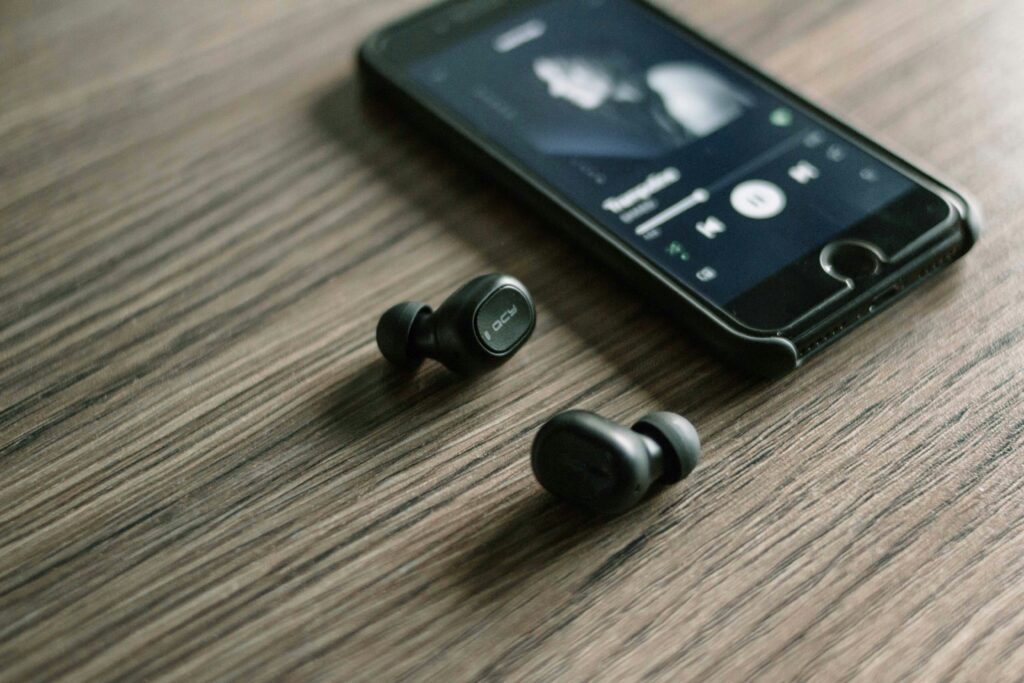
Finding the right headphones for running and gym workouts solves several problems at once: keeping earbuds in your ears through sweat and movement, getting enough volume over ambient gym noise, maintaining a secure enough fit that you are not constantly readjusting, and having water resistance that handles sweat and rain. This guide covers the best earbuds and headphones for running and gym use in 2026, how to wear earbuds correctly while running, why earbuds fall out and how to fix it, and in-depth reviews of the most popular workout audio options.
For waterproofing and IP ratings on specific headphones — including Beats, AirPods Pro, JLab, and Sony — see our guide to are Beats Solo 4, AirPods Pro, and Sony headphones waterproof — IP rating guide.
Best Earbuds for Running and Gym 2026 — Quick Picks
| Earbuds | IP Rating | Price | Best For |
| Jabra Elite 8 Active | IP68 | $149 | Best overall workout earbuds |
| Beats Fit Pro | IPX4 | $149 | Best Apple ecosystem workout |
| Powerbeats Pro 2nd gen | IPX4 | $199 | Best for runners; ear hook fit |
| JLab Epic Air Sport ANC | IP66 | $80 | Best budget ANC workout |
| JLab Go Air Sport | IP66 | $30 | Best ultra-budget workout |
| Samsung Galaxy Buds 2 Pro | IPX7 | $149 | Best for Android; shower safe |
| Skullcandy Push Active | IP55 | $60 | Good mid-budget option |
| JBL Endurance Run 2 Wired | IPX7 | $25 | Best wired running earphones |
Running with Headphones — Over-Ear vs Earbuds vs Bone Conduction
Can You Run with Headphones?
Yes — running with headphones is safe and common, but the type of headphone matters significantly for running comfort and safety. Three main options for running:
1. In-Ear Earbuds (True Wireless)
True wireless earbuds are the most popular running headphone format. They eliminate cable snagging, are lightweight, and sport-focused models have excellent IP ratings. The main challenge: keeping them in your ears during high-impact running. The best running earbuds feature ear hooks, wing tips, or angled nozzles that anchor them against the anti-tragus (the ridge of cartilage above your earlobe) to resist the bouncing motion of running.
2. Over-Ear and On-Ear Headphones
Running with over-ear headphones is possible but not ideal. Over-ear headphones are heavier, generate more heat around your ears, can shift during high-impact movement, and most lack IP water resistance for sweat. They are better for lower-intensity gym use (weight training, cycling machines, treadmill) than for outdoor running. If you prefer over-ear for gym use, look for on-ear models rather than full over-ear — they are lighter and more secure during movement.
3. Bone Conduction Headphones
Bone conduction headphones (Shokz OpenRun Pro, Shokz OpenSwim) sit on your cheekbones rather than in your ears, transmitting sound through bone vibration. They leave your ear canals completely open for maximum situational awareness — you can hear traffic, cyclists, and other runners while still enjoying music. Bone conduction is ideal for road running safety. Sound quality is not as good as in-ear earbuds but the open-ear safety benefit is significant for outdoor running.
| Type | Pros for Running | Cons for Running |
| In-ear earbuds | Lightweight, secure fit options, best audio | Can fall out, blocks ambient sound |
| Over-ear headphones | Better audio quality, comfortable | Heavy, less secure, heat build-up |
| Bone conduction | Open ears for safety, no canal pressure | Less bass, lower audio quality |
How to Wear Earbuds While Running — Keep Them In
Why Do Earbuds Fall Out When Running?
Earbuds fall out during running for three reasons: wrong ear tip size (the most common cause), incorrect insertion angle, or an earbud design without secure anchoring features. Running creates repetitive vertical impact that loosens earbuds with each footstrike — the solution is finding earbuds that anchor against your ear’s anatomical structures, not just relying on ear canal pressure.
Step-by-Step — How to Wear Earbuds Correctly for Running
- Select the correct ear tip size: Try all included sizes. The correct tip creates a gentle seal in your ear canal without discomfort — if you can wiggle the earbud easily with a finger, the tip is too small
- Insert at the correct angle: Most earbuds insert at a slight forward angle — push in, then rotate backward slightly so the earbud faces forward in your ear canal
- Use the anti-tragus anchor: For earbuds with wing tips, ensure the wing tip presses against the anti-tragus — the small cartilage ridge above your earlobe. This anchor point prevents the earbud from dropping during impact
- If over-ear hooks: Route the cable/stem over your ear before inserting the earbud — over-ear hooks should be snug against the top of your outer ear
- Test before running: Do a few jumping jacks at home — if earbuds stay in through that, they will likely stay in while running
Earbuds That Stay In — Best Secure-Fit Running Options
- Powerbeats Pro: Over-ear hook design anchors to the outer ear regardless of ear canal shape — the most reliably secure running earbud for users whose ears reject standard earbuds
- Beats Fit Pro: Flexible wingtip that hooks into the anti-tragus — more secure than standard AirPods Pro for running
- Jabra Elite 8 Active: Multiple angled ear tip designs + ShakeGrip coating that becomes tackier with sweat — stays in during high-intensity exercise
- JLab Epic Air Sport: Six ear tip sizes included (more than most competitors) + dual gel tips for secure fit
- Bose QuietComfort Earbuds II: StayHear Max tips with three-point anchoring — excellent retention for users with round ear canals
Wireless Earbuds That Don’t Go in Your Ear
If you find all in-ear earbuds uncomfortable or they always fall out regardless of size, there are alternatives that sit at the opening of your ear canal without inserting deeply:
- AirPods (4th gen, no ANC): Open-ear design — sits at the ear canal entrance without inserting; many people find these more comfortable than in-ear designs but they provide less isolation and can fall out more easily
- Samsung Galaxy Buds FE: Open-style fit with wing tips for stability
- Shokz OpenFit: Open-ear hook design that clips over the outer ear without any insertion — similar comfort to bone conduction without actual bone conduction technology
- Shokz OpenRun Pro: True bone conduction — no ear contact at all; sits on cheekbones
How to get earbuds to stay in ear if nothing works: Memory foam ear tips (Comply Foam, Spinfit) are significantly more grippy than silicone tips and often solve persistent falling-out issues. They compress for insertion and expand to fill your ear canal uniquely. Compatible with most earbuds that use standard ear tip sizes (XS/S/M/L). Comply Foam tips are the most popular third-party solution for earbuds that will not stay in.
Loudest Headphones for the Gym
Gym environments are loud — up to 80-90 dB from equipment, music, and conversation. Getting enough volume to hear your music over ambient gym noise requires either high-output earbuds or noise isolation. Options:
Loudest Earbuds for Gym Use
- JLab Go Air Sport: Remarkably loud for a $30 earbud — custom EQ in JLab app boosts volume significantly
- Skullcandy Push Active: High output driver with Skull-iQ app volume boost
- Beats Fit Pro: Powerful drivers + optional passive isolation from ear tip seal
- Sony WF-1000XM5: With ANC disabled, passive isolation alone blocks significant gym noise; very high driver output
ANC for Gym Noise — Does It Help?
Active Noise Cancellation works differently in gyms versus quiet environments. ANC is most effective against consistent, low-frequency noise (ventilation hum, treadmill motors) and less effective against unpredictable sounds (weights dropping, conversations). For the gym specifically, ANC provides moderate benefit — it reduces background hum but will not eliminate the sound of weights and people around you. Passive isolation (a good ear tip seal) is often more effective than ANC for blocking high-frequency gym noise.
JLab Go Air Sport Review
The JLab Go Air Sport ($30) is the most recommended budget workout earbud for several compelling reasons: IP66 rating (better than AirPods Pro’s IPX4 at one-fifth the price), 30-hour total battery life (8 hours earbuds + 22 in case), three EQ modes (Signature, Balanced, Bass Boost) accessible via button combination, and six ear tip sizes for finding a secure running fit. Sound quality is acceptable for workout use — the bass is emphasized and the treble can be harsh at high volumes, but for motivational workout music this signature works. The charging case is plasticky but the $30 price makes durability concerns minor. For budget-conscious runners and gym users, the Go Air Sport is the clear recommendation.
| JLab Go Air Sport | Specs |
| Price | $30 |
| IP Rating | IP66 |
| Battery | 8hrs + 22hrs case = 30hrs total |
| Connectivity | Bluetooth 5.1 |
| Controls | Physical button (not touch) |
| Microphone | Dual microphones |
| Verdict | ✅ Best budget workout earbud — exceptional IP66 at $30 |
JBL Endurance Run 2 Wired Review
The JBL Endurance Run 2 Wired ($25) is a rare product in 2026 — a wired running earbud with an IPX7 rating. Wired earphones for running have two advantages: no battery to run out mid-run, and no Bluetooth latency. The Endurance Run 2 uses JBL’s FlipHook design — the ear hook flips between in-ear and over-ear positioning, adapting to different ear shapes. IPX7 rating means it is waterproof to 1 meter, handling sweat, rain, and even brief water immersion.
Sound quality from the 6mm drivers is acceptable for running — adequate bass for motivation, clear enough mids for podcasts. The 3.5mm cable is tangle-prone (a common wired earbud complaint) but the audio quality and IPX7 rating at $25 make it the best value running earphone available. Recommended for runners who use phones with 3.5mm jacks or who prefer wired reliability during long runs.
AirPods at the Gym — Are They Good for Working Out?
AirPods Pro (2nd gen) at the gym are functional but not optimally designed for workout use. Advantages: excellent ANC for blocking treadmill and machine noise, transparency mode for hearing trainers or gym floor announcements, Personalized Spatial Audio, and tight Apple ecosystem integration. Disadvantages: IPX4 rating means they are adequate for sweat but not drenching workouts; standard ear tips can fall out during high-impact exercise; they are expensive enough that losing or damaging them during intense workouts is a concern.
AirPods 4 (standard, no ANC) at the gym: the open-ear design means ambient noise passes through freely — you will hear the gym around you constantly, which some users prefer for safety and gym floor awareness. For lifting weights while listening to music, AirPods 4 are convenient and the open-ear design does not isolate you from your environment. For running or high-intensity cardio, the open-ear fit is more likely to fall out than sealed in-ear designs.
For Beats-specific waterproofing questions and IP ratings across the full Beats lineup, see our guide to are Beats Solo 4 and Beats headphones waterproof — complete IP rating guide.
For independent workout headphone reviews and testing, see Rtings.com — best headphones for working out. For running headphone safety guidance, see Runner’s World — headphone guide for runners.
For specific waterproofing ratings across Beats, JLab, AirPods, and Sony headphones, see our guide to are Beats Solo 4, AirPods Pro, and JLab headphones waterproof — IP rating guide.
Headphones for Exercise — Gym-Specific Tips
Different gym activities have different headphone requirements. For treadmill running: secure-fit earbuds or bone conduction are ideal — the up-down impact motion is the hardest on earbud retention, and you also want awareness of the treadmill belt speed. For weight training: any comfortable earbuds or over-ear headphones work; stability is less critical since you are not generating continuous impact; over-ear headphones are popular for lifting as they provide better passive isolation against gym ambient noise. For cycling (stationary): over-ear headphones are comfortable and stay in place; no impact means retention is not a concern. For group fitness classes (spin, HIIT, aerobics): ANC is counterproductive in group classes where you need to hear the instructor — transparency mode or open-ear earbuds are better suited. For outdoor running near traffic: open-ear earbuds (AirPods 4), transparency mode, or bone conduction headphones prioritize safety over isolation. Matching the headphone type to your specific exercise provides a significantly better experience than using the same headphones for every activity.
For gaming audio and the best gaming laptops for portable use, see our guide to the best gaming laptops under $300 and $500 — budget gaming guide 2026.
Bottom Line
| Best workout earbuds overall | Jabra Elite 8 Active (IP68, ShakeGrip, $149) |
| Best budget workout earbuds | JLab Go Air Sport (IP66, $30) — exceptional value |
| Best for runners (fit) | Powerbeats Pro — over-ear hook never falls out |
| Best Apple ecosystem gym earbuds | Beats Fit Pro (IPX4, wingtip, $149) |
| Best wired running earphones | JBL Endurance Run 2 Wired (IPX7, $25) |
| How to keep earbuds in | Correct ear tip size + Comply foam tips if needed |
| Earbuds that don’t go in ear | Shokz OpenFit, AirPods 4 open design |
| Loudest gym earbuds | JLab Go Air Sport (EQ boost) or Beats Fit Pro |
| AirPods for gym? | Functional; IPX4 adequate for sweat; can fall out running |
| Over-ear for running? | Not ideal — use earbuds; bone conduction for safety |
Frequently Asked Questions
Is it safe to run with headphones?
Running with headphones is safe with proper precautions. For road running near traffic, bone conduction headphones (Shokz OpenRun Pro) or transparency mode on AirPods Pro allows you to hear your environment while still enjoying music. Avoid using noise-canceling headphones at high volume on roads — situational awareness is important for safety around vehicles and cyclists. On treadmills and indoor tracks, full isolation headphones are fine. Most running organizations and race events now allow headphones, though some competitive events still prohibit them.
How do I keep earbuds in while running?
To keep earbuds in during running: use the correct ear tip size (experiment with all included sizes — a common mistake is defaulting to medium when small or large fits better), ensure wing tips or ear hooks engage the anti-tragus cartilage ridge, try Comply Foam ear tips as a replacement for silicone if earbuds still fall out, and consider earbuds with ear hooks (Powerbeats Pro, JLab Epic Air Sport) if you have anatomically round ear canals that reject standard earbuds. Rotating the earbud slightly forward after insertion often improves retention.
What are the loudest headphones for the gym?
The loudest earbuds for gym use are typically those with active noise cancellation you can disable, relying on passive isolation for ambient blocking while maximizing driver output — Sony WF-1000XM5, Jabra Elite 8 Active, and Beats Fit Pro are among the highest-output workout earbuds. Budget options like JLab Go Air Sport can be pushed to loud volumes with the Bass Boost EQ mode. For over-ear headphones, the Bose QuietComfort 45 with ANC off and maximum volume delivers very high output. Note: listening above 85dB for extended periods causes hearing damage — use volume responsibly.
Are JLab Go Air Sport earbuds good for running?
Yes — the JLab Go Air Sport are excellent running earbuds at their $30 price point. IP66 rating handles sweat, rain, and water jets better than AirPods Pro (IPX4) at five times the price. Six included ear tip sizes help find a secure running fit. Battery life (8 hours per charge) handles long runs easily. The physical button controls work with sweaty fingers better than touch controls. The main limitation is sound quality — adequate for motivational workout music but not for audiophile listening. For budget-conscious runners, JLab Go Air Sport is the top recommendation.