
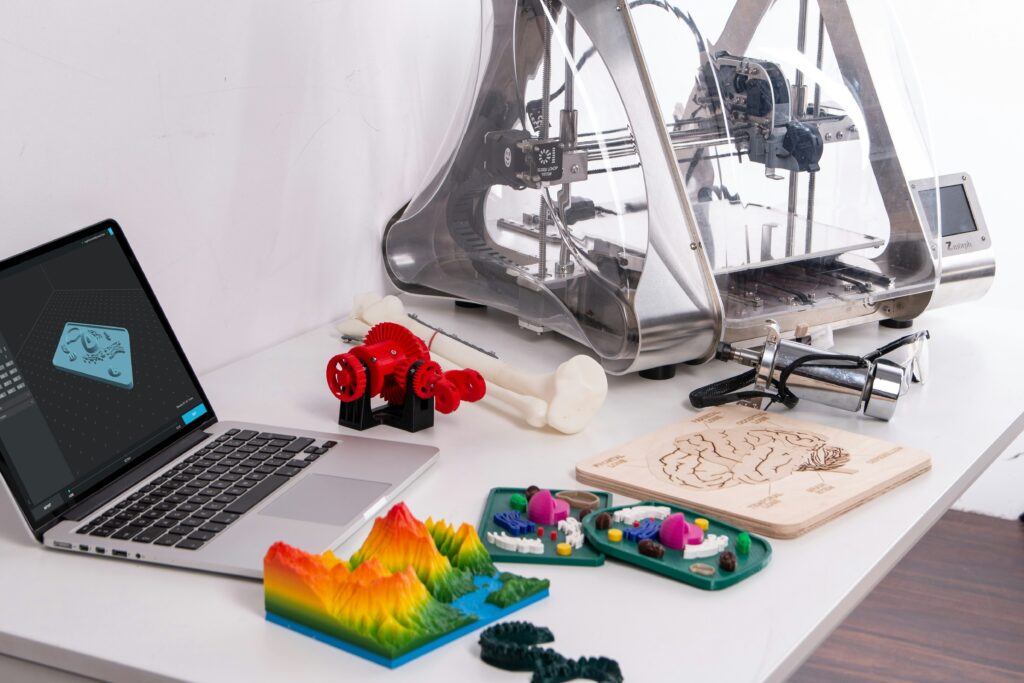
Whether the goal is figuring out if a home 3D printer is worth buying, pricing items to sell, or just satisfying curiosity about what that fidget toy actually cost to make, the answer to “how much does 3D printing cost” breaks down into a few clear components. Here’s how the numbers actually work out in 2026, from electricity and material costs to professional services and starting a small printing business.
The Basic Cost Formula
At its core, the cost of any 3D print comes down to: material cost + electricity cost + machine depreciation/wear + (optionally) labor and post-processing. Most online calculators automate this formula, but understanding each piece makes it much easier to sanity-check any number a calculator spits out – or to price prints for sale.
Material Cost: The Biggest Variable
Material cost depends on the filament’s price per kilogram and how much the print actually weighs. A standard 1kg spool of PLA costs around $20, which works out to about $0.02 per gram. A small print weighing 15 grams (roughly the size of the popular 3DBenchy test model) costs around $0.30 in material – genuinely tiny. A larger, more detailed print weighing 100-200 grams might run $2-$4 in material alone.
Specialty filaments change this math significantly – carbon fiber composites, nylon, and especially metal-filled filaments cost considerably more per kilogram than standard PLA or PETG, which is worth factoring in before committing a large or long print to an expensive material.
Electricity: Smaller Than Most People Expect
Electricity is often assumed to be a bigger cost than it actually is. A typical hobby FDM printer draws 50-300 watts during printing, averaging roughly 0.1-0.2 kWh per hour. At the 2026 US average electricity rate of about $0.17/kWh, that works out to roughly $0.02-$0.03 per hour of printing – meaning a 5-hour print costs somewhere around $0.10-$0.15 in electricity.
Even for a heavy hobbyist running prints 4 hours a day, every day, for a year, the additional electricity cost lands around $25-$45 annually. For context, a 3D printer running continuously for a month typically uses less electricity than a refrigerator over the same period. Resin printers draw somewhat less during active printing, though their wash-and-cure stations add a small additional fixed cost per print.
Putting It Together: Real Cost Examples
| Material + Electricity Only | With Setup Time/Design Fee | |
| Small test print (15g, ~45 min) | ~$0.32 | ~$3.32 (with setup + designer tip) |
| Medium flexi-print (similar to a Flexi Rex) | ~$0.68 | ~$5.68 (with setup + slicer config + tip) |
| Larger detailed model (with supports) | ~$4.32 | ~$9.32 (with setup + manual support placement + tip) |
These figures illustrate a key point: for small, simple prints, material and electricity costs are genuinely negligible – it’s the time spent on setup, slicing, support placement, and any custom design work that makes up most of the “real” cost once labor is factored in.
Machine Depreciation: The Often-Forgotten Cost
If a 3D printer cost $300 and the owner wants to recoup that investment over, say, 6 months of regular use, that depreciation can be converted into a per-hour operating cost – dividing the printer’s price by the number of hours of use needed to hit that recovery timeline. For a $300 printer aiming to recoup its cost over roughly 4,400 hours of printing (about 6 months of heavy use), that works out to a fixed cost of a few cents per hour, added on top of material and electricity.
This depreciation cost is small per individual print, but it matters for anyone pricing prints to sell, since ignoring it means slowly running a printer into the ground without ever budgeting for its eventual replacement.
Buying vs. Using a 3D Printing Service
For occasional prints, an online or local 3D printing service may actually be more cost-effective than buying a printer – the breakeven point depends heavily on how often printing happens. As a rough framework from 2026 industry analysis:
- A budget printer (around $200) tends to break even against typical service-bureau pricing after roughly 25-40 prints
- A mid-range enclosed printer (around $550) breaks even after roughly 60-100 prints
- A budget resin printer (around $270) breaks even after roughly 100-150 resin prints
As a rule of thumb, printing less than about one part a week often favors using a service bureau, while printing more than about two parts a week tends to favor owning a printer. Most casual hobbyists who do end up buying a printer hit their personal breakeven point within 3-6 months.
Finding 3D Printing Services and Classes Near You
For one-off prints, prototypes, or trying 3D printing before committing to a purchase, local options include makerspaces, libraries (many now offer 3D printing services or equipment access), university fab labs open to the public, and dedicated local print shops. Online services are also widely available and typically provide instant quotes based on uploaded model files, material choice, and quantity.
For learning the process hands-on, local classes – often run through community colleges, makerspaces, or libraries – provide structured introductions to design software, slicing, and printer operation, which can be a useful step before buying a printer or as an alternative to self-teaching from online guides.
3D Printer Repair: When and Where
Most common 3D printer issues – clogged nozzles, bed adhesion problems, loose belts – are addressable through DIY troubleshooting and readily available replacement parts, and most printer manufacturers provide troubleshooting guides for exactly these issues. For more involved problems (electronics failures, motherboard issues, or anything involving the printer’s firmware), local repair services or, for printers still under warranty, the manufacturer’s support channels are the more reliable routes.
When searching for repair help locally, makerspaces and dedicated electronics repair shops are often a better fit than general appliance repair services, given the specialized nature of 3D printer components and firmware.
Pricing 3D Prints for Sale: A Starting Framework
For anyone considering selling 3D printed items – on Etsy, at markets, or as a small business – a sustainable pricing formula needs to go beyond just materials and electricity:
- Material cost: weight of the print x price per gram of the filament used
- Machine time cost: print duration x an hourly operating rate that covers electricity plus depreciation (commonly $1-$5/hour for consumer-grade machines)
- Labor: time spent on design work (if custom), slicing/setup, and post-processing, valued at an appropriate hourly rate – often $20-$100+/hour depending on skill level for design work specifically
- Platform fees and packaging: for marketplaces like Etsy, listing fees, transaction fees, and shipping materials all eat into margin if not accounted for upfront
A common mistake among new sellers is undervaluing their own time, particularly design time, because the work doesn’t feel like “real” labor when it’s also a hobby. Tracking actual time spent on early projects – even roughly – provides a much more realistic basis for pricing future work than guessing.
3D Print Cost Calculators: What They Do
Several free online calculators automate the cost formula described above, typically asking for the model’s weight (often pulled directly from slicer software like Cura, PrusaSlicer, Bambu Studio, or OrcaSlicer), material type and price, printer wattage, local electricity rate, and the printer’s purchase price and expected lifespan for depreciation. Some calculators can even read slicer-exported file data directly to pull time and weight estimates automatically, removing manual entry.
For sellers, some calculators go further, suggesting a recommended retail price based on a standard margin (often around 30%) and optionally factoring in marketplace fees like Etsy’s listing and transaction costs to estimate real net profit rather than just revenue.
Is 3D Printing Actually Cheaper Than Buying?
For mass-produced consumer goods, usually not. A 3D printed phone case might cost $3-$8 in materials and a few hours of print time – which can match the price of a mass-produced equivalent, but rarely beats it once time is factored in. Where 3D printing genuinely wins is the long tail: replacement parts for discontinued products, custom-fit components, prototypes, one-off items that aren’t manufactured at scale, or modifications to existing products that simply aren’t available to buy at any price.
3D Printing as a Side Business or Job
Beyond selling individual prints, 3D printing has become a viable small-business path for many makers – whether that’s running an Etsy shop focused on a specific niche (custom keychains, tabletop gaming terrain, replacement parts for discontinued products), offering local printing services for prototypes and one-off requests, or taking on freelance design work that combines 3D modeling with printing.
On the employment side, “3D printing jobs” covers a fairly wide range: roles at companies that operate print farms (multiple printers running simultaneously for production work), positions combining 3D design/CAD skills with printing knowledge, technician roles maintaining and operating industrial printers, and education-sector roles teaching 3D printing in schools or makerspaces. For most of these roles, demonstrated experience – including a portfolio of completed prints, designs, or a track record running a small printing operation – tends to matter more than formal credentials, though CAD software proficiency (Fusion 360, Tinkercad, SolidWorks, or similar) is commonly expected.
For anyone considering 3D printing as a more serious income source rather than a hobby, the cost framework above becomes essential rather than optional – underpricing work based on materials alone, without accounting for machine time, depreciation, and labor, is one of the most common ways a 3D printing side business fails to actually be profitable despite seeming busy.
Print Farms: Running Multiple Printers
For higher-volume operations – whether a serious side business or a small production run – a “print farm” of multiple printers running simultaneously introduces cost considerations beyond a single-printer setup. Electricity costs scale roughly linearly with the number of printers running, but depreciation and maintenance costs can actually improve on a per-print basis with good fleet management, since downtime on any single machine matters less when others are still running.
The tradeoff is added complexity: managing filament across multiple printers, monitoring for failed prints across machines that aren’t being watched individually, and the logistics of keeping several machines fed, calibrated, and maintained. For most hobbyists, a single printer (or two) remains the practical choice; print farms tend to make sense only once volume genuinely justifies the added operational overhead.
Frequently Asked Questions
How much does it cost to 3D print something?
For small prints, material and electricity costs are often under $1 – sometimes just a few cents. Larger or more detailed prints with supports might run a few dollars in materials. The total cost depends heavily on whether time, design work, and machine depreciation are factored in alongside raw materials.
How much electricity does a 3D printer use?
A typical hobby FDM printer uses about 0.1-0.2 kWh per hour, costing roughly $0.02-$0.03 per hour at 2026 US average electricity rates. A heavy daily hobbyist adds roughly $25-$45 to their annual electricity bill.
Is it cheaper to buy a 3D printer or use a printing service?
It depends on print frequency. Budget printers typically break even against service-bureau pricing after 25-40 prints, with more expensive printers requiring more prints to break even. Printing less than about once a week often favors a service; more than twice a week tends to favor ownership.
How do I price 3D prints to sell?
A sustainable price includes material cost, machine time (electricity plus depreciation, often $1-5/hour), labor for design and post-processing (often $20-100+/hour for design work), and any platform fees – not just the raw material cost.
Is 3D printing cheaper than buying things normally?
Usually not for mass-produced items, where 3D printing might match but rarely beats retail pricing once time is included. It’s most cost-effective for replacement parts, custom-fit items, prototypes, and one-off objects that aren’t available to buy at all.
Final Thoughts
The headline numbers around 3D printing cost are genuinely small for individual prints – often well under a dollar in raw materials and electricity for typical hobbyist projects. The real cost conversation shifts once time, design work, machine depreciation, and (for sellers) platform fees enter the picture. Whether the right approach is buying a printer, using a local service, or taking a class to learn the basics first comes down mostly to how often printing will actually happen – a question worth answering honestly before spending money on equipment that might be better rented by the print.