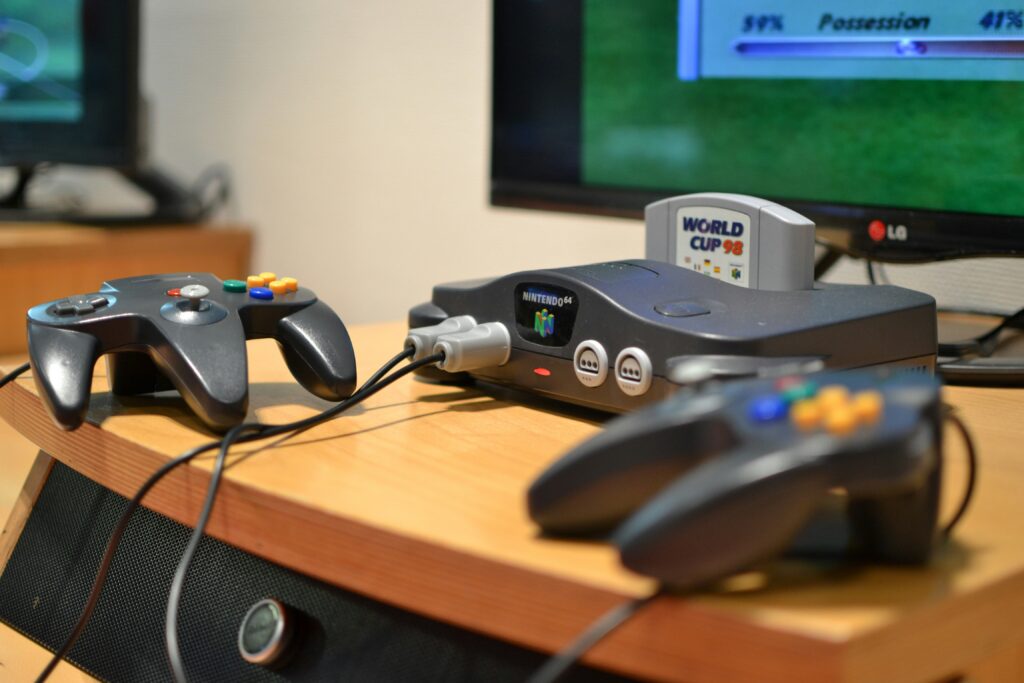
The retro gaming console market in 2026 is the most competitive it has ever been — a range of purpose-built handheld devices, plug-and-play TV consoles, and multi-system emulation hardware covering every budget from $30 to $900+. Whether you want something that slips into a pocket for NES and SNES games, a more powerful device that handles PlayStation 2 and GameCube, or a living-room setup for classic games on a television, the options have never been better.
This guide covers the best retro gaming consoles by category, with honest notes on what each device can and cannot emulate, battery life, form factor, and who each suits best.
Retro Gaming Consoles: Quick Reference by Category
| Device | Price | Best For | Emulation Range |
| Miyoo Mini Plus | ~$70 | Best budget handheld; pocket carry | NES/SNES/GBA/PS1 |
| Anbernic RG35XXSP | ~$60 | Best clamshell; GBA SP feel | NES/SNES/GBA/PS1/N64 |
| Anbernic RG35XX H | ~$65 | Best horizontal layout budget | NES/SNES/GBA/PS1/N64 |
| Retroid Pocket 5 | ~$160 | Best all-rounder; OLED | Up to PS2/GameCube |
| Retroid Pocket 4 Pro | ~$130 | Best value mid-range | Up to PS2/GameCube |
| Analogue Pocket | ~$220 | Best authentic hardware; FPGA | Game Boy/GBA/SNES/Genesis |
| Nintendo Switch Online | ~$50/year | Best legal NES/SNES/N64 library | NES/SNES/GBA/N64/Sega |
| Steam Deck (+ EmuDeck) | ~$400+ | Best PC-power retro device | Up to PS3/Wii U |
Best Budget Retro Gaming Handhelds (Under $100)
1. Miyoo Mini Plus — Best Budget Retro Handheld
Price: ~$65–$80 | Form: Vertical (Game Boy style) | Screen: 3.5-inch IPS 640×480 | Battery: ~6 hours | Emulation: NES, SNES, Game Boy, GBA, Sega Genesis, PS1
The Miyoo Mini Plus is the most recommended budget retro handheld for players whose primary interest is 8-bit through 32-bit gaming — NES, SNES, Game Boy, GBA, Sega Genesis, and PlayStation 1 content all run at full speed with accurate audio and video. At approximately $65 to $80, it provides performance and build quality that previously cost significantly more.
The 3.5-inch IPS panel at 640×480 resolution is well-matched to retro content — pixel-perfect integer scaling means 8-bit and 16-bit art displays exactly as intended without blurring or stretching. The Game Boy-style vertical form factor is genuinely pocketable for most jacket or cargo pockets. Battery life reaches approximately 6 hours in practical testing with PS1 content (manufacturer estimates trend optimistic).
OnionOS — the community firmware maintained for the Miyoo — is actively developed and adds significant features including OTA updates, game scraping, RetroAchievements support, and a polished interface. Installing OnionOS is recommended over the stock firmware. Community support is extensive.
- Best for: Players focused on NES/SNES/GBA/PS1; first retro handheld purchase; pocket portability priority
- Limitation: No analog sticks (D-pad only) — unsuitable for N64 or PS2 games that require analog input
2. Anbernic RG35XXSP — Best Clamshell Retro Handheld
Price: ~$55–65 | Form: Clamshell (GBA SP style) | Screen: 3.5-inch IPS | Battery: ~5–6 hours (3300mAh) | Emulation: NES, SNES, GBA, PS1, N64, Dreamcast
The Anbernic RG35XXSP is the best clamshell retro handheld — a form factor that closes over the screen for protection and compresses to a genuinely small size for pocket carry. The visual reference to the Game Boy Advance SP is intentional and accurate: the hinge is solid (alloy axle construction, capable of 180-degree extension for multiple viewing angles), the screen folds away protected, and the device is comfortable for extended sessions.
The H700 processor handles PS1 content cleanly and reaches into N64 and Dreamcast emulation. Like the Miyoo Mini Plus, this is a device best suited to 8-bit through 32-bit gaming rather than demanding 3D emulation. The clamshell form factor’s screen protection advantage is meaningful for daily carry — a dropped device that closes won’t crack the screen the way a non-clamshell device will.
- Best for: Players who want GBA SP-style form factor; daily carry; screen protection priority
3. Anbernic RG35XX H — Best Horizontal Budget Handheld
Price: ~$60–70 | Form: Horizontal with analog sticks | Screen: 3.5-inch IPS | Battery: ~5–6 hours | Emulation: NES, SNES, GBA, PS1, N64
The RG35XX H is the horizontal form factor variant of the RG35XX series — the same internal hardware with the addition of two analog sticks, positioned in a layout that feels natural for PS1 and N64 games that require thumbstick input. The analog sticks on the H make it the correct budget choice for players who specifically want to play PS1 3D games (Gran Turismo, Crash Bandicoot, Metal Gear Solid) and N64 content rather than limiting themselves to D-pad games.
At roughly $60 to $70, the RG35XX H is one of the few budget handheld options with analog sticks at an approachable price. The GARLIC OS community firmware available for RG35XX devices is actively maintained with similar feature depth to Miyoo’s OnionOS.
Best Mid-Range Retro Gaming Handhelds ($100–$200)
4. Retroid Pocket 5 — Best All-Round Retro Handheld
Price: ~$160 | Form: Horizontal, Android-based | Screen: 4.7-inch OLED | Battery: ~5–7 hours | Emulation: NES through PS2, GameCube, PSP, Dreamcast, and more
The Retroid Pocket 5 is the best mid-range retro gaming handheld and the most recommended device for players who want capability beyond the 32-bit era. The 4.7-inch OLED screen is the most visually impressive display in this price range — OLED’s contrast ratio and color reproduction make both retro pixel art and 3D PS2-era content look outstanding. The Android-based operating system allows the full range of emulation applications available on the Play Store alongside RetroArch.
PlayStation 2 and GameCube emulation run at full or near-full speed on most titles, though demanding games (Shadow of the Colossus, Resident Evil 4, complex open-world PS2 titles) require per-game optimization. PSP emulation (PPSSPP) is excellent. The device handles everything from NES through the 6th console generation reliably.
The Android foundation means occasional configuration complexity compared to purpose-built emulation devices like the Miyoo, but the power ceiling is substantially higher. The Retroid Pocket 4 Pro at approximately $130 is a slightly older but still capable alternative at lower cost.
- Best for: Players who want PS2/GameCube/PSP capability; best screen in the mid-range category
- Note: Android configuration can require more setup than simpler devices like the Miyoo
Best Premium Retro Gaming Hardware ($200+)
5. Analogue Pocket — Best Authentic Retro Hardware
Price: ~$220 | Form: Vertical handheld | Screen: 3.5-inch LCD (1600×1440) | Technology: FPGA (Field Programmable Gate Array) | Emulation: Game Boy, GBA, SNES (via Cores), Sega Genesis, Atari Lynx, Neo Geo Pocket
The Analogue Pocket is fundamentally different from every other device in this guide — it uses FPGA technology (Field Programmable Gate Array) rather than software emulation. FPGA recreates the original hardware circuits at the hardware level, producing output that is indistinguishable from original hardware including original hardware quirks, audio output, and timing. For players who want the most authentic possible recreation of Game Boy, GBA, and classic console content, the Analogue Pocket is the correct choice.
The 3.5-inch 1600×1440 LCD is the highest-resolution screen on any retro handheld — at this resolution, integer scaling of Game Boy and GBA content is perfect, with no filtering required. The Analogue Pocket also accepts original Game Boy, GBA, and Game Gear cartridges directly, meaning it plays physical game collections. SNES, Genesis, and other platform support is available through community-developed Cores (FPGA implementations of each hardware).
The premium is real: $220 versus $70 for a Miyoo Mini Plus that plays the same game libraries. The Analogue Pocket’s justification is authenticity and original cartridge support — not emulation performance, which the cheaper devices match.
- Best for: Enthusiasts who want FPGA accuracy; players with original cartridge collections; highest authenticity
6. Steam Deck with EmuDeck — Best High-Power Retro Device
Price: ~$400 (LCD base) to $650 (OLED) | Operating System: Linux/Windows | Emulation: NES through PS3, Wii U, 3DS, and more
The Steam Deck is not a dedicated retro console, but with EmuDeck — a community installation tool that configures dozens of emulators simultaneously — it becomes the most powerful retro gaming handheld available under $1,000. PS3, Wii U, Xbox 360, and even some early current-gen emulation is possible on Steam Deck that purpose-built retro handhelds cannot approach.
The setup process is more involved than a Miyoo or Retroid Pocket, and the Steam Deck is heavier and larger than dedicated retro handhelds. But for players who want both current-generation Steam gaming and complete retro gaming coverage on a single device, no other option matches it.
- Best for: Players who want maximum emulation coverage plus Steam gaming on one device
- Note: Significantly heavier and larger than dedicated retro handhelds; not primarily a retro device
Best TV-Connected Retro Gaming Consoles
7. Nintendo Switch Online — Best Legal Retro Library for TV
Price: ~$50/year (Individual) | Legal status: Licensed content | Library: NES, SNES, Game Boy, GBA, N64, Sega Genesis
Nintendo Switch Online provides the most legally clean retro gaming library available for TV play — fully licensed NES, SNES, Game Boy, GBA, N64, and Sega Genesis games through the NSO subscription and NSO + Expansion Pack tier. The library is curated (not every game from each system is available) but includes the most celebrated titles from each platform: Super Mario Bros., The Legend of Zelda, Super Metroid, F-Zero X, Banjo-Kazooie, and dozens more.
For players who already own a Nintendo Switch, NSO’s retro library is the simplest and most legally sound way to access classic games on a television. The additional cost is modest compared to dedicated retro hardware.
8. Plug-and-Play Mini Consoles
Nintendo and Sega released official mini consoles in the late 2010s that remain available second-hand:
- SNES Classic Mini: 21 pre-loaded SNES games including Super Mario World, Super Metroid, Chrono Trigger, and Street Fighter II. HDMI output. No cartridge slot. ~$80–100 second-hand.
- NES Classic Mini: 30 pre-loaded NES games. HDMI output. ~$60–80 second-hand.
- Sega Genesis Mini: 40+ pre-loaded Sega Genesis games including Sonic, Streets of Rage 2, and Castlevania. HDMI output. ~$60–80 second-hand.
These mini consoles are simple, legally licensed, and produce accurate output for their respective systems. They’re the best option for players who want a specific platform’s classic library without any configuration.
Note on Emulation and Legality
Most retro gaming handhelds (Miyoo, Anbernic, Retroid) are sold as emulation-capable hardware without pre-loaded games. The devices themselves are legal to purchase and own. The legal complexity is in the software:
- Emulation software (RetroArch, standalone emulators): Generally legal to install and use
- ROMs of games you physically own: Legal status varies by jurisdiction and is actively debated
- Downloading ROMs of games you don’t own: Not legal, regardless of whether the game is still commercially available
Some devices (particularly budget options from certain manufacturers) arrive pre-loaded with unauthorized game ROMs. Legally, you should use games you own physical copies of. The Analogue Pocket with original cartridges, Nintendo Switch Online, and official mini consoles are the completely legally straightforward options.
Which Retro Gaming Console Is Right for You?
| You want… | Best Retro Gaming Console |
| Best budget pocket handheld | Miyoo Mini Plus (~$70) |
| Best clamshell / GBA SP feel | Anbernic RG35XXSP (~$60) |
| Play N64/PS1 3D games (analog sticks) | Anbernic RG35XX H (~$65) |
| Best OLED screen; PS2/GameCube capable | Retroid Pocket 5 (~$160) |
| Most authentic FPGA hardware; original carts | Analogue Pocket (~$220) |
| Maximum emulation power | Steam Deck + EmuDeck (~$400+) |
| Legal TV retro library (Switch owner) | Nintendo Switch Online (~$50/yr) |
| Plug-and-play TV classics (no setup) | SNES/NES/Sega Genesis Mini ($60–100) |
Frequently Asked Questions
What is the best retro gaming console?
For handheld retro gaming, the Miyoo Mini Plus (~$70) is the best budget recommendation — it handles NES through PS1 content perfectly in a genuinely pocketable form factor with excellent community firmware. For players who want PS2 and GameCube capability, the Retroid Pocket 5 (~$160) is the best mid-range all-rounder with an OLED screen. For the most authentic hardware recreation with original cartridge support, the Analogue Pocket (~$220) is the premium choice. For TV-connected retro gaming with fully licensed content, Nintendo Switch Online is the simplest option for Switch owners.
What is the best handheld retro gaming console?
The Miyoo Mini Plus is the best handheld retro gaming console for most players in 2026 — excellent build quality, a crisp 3.5-inch IPS screen, 6-hour battery life, and smooth emulation of NES through PS1 at under $80. The Anbernic RG35XXSP is the best alternative for players who prefer the clamshell form factor. For players who need PS2 and GameCube capability, the Retroid Pocket 5 is the step up.
What systems can retro gaming handhelds emulate?
Budget handhelds (Miyoo Mini Plus, RG35XXSP) typically handle NES, SNES, Game Boy, GBA, Sega Genesis, Game Gear, and PlayStation 1 at full speed. Some reach N64 and Dreamcast with varying performance. Mid-range devices (Retroid Pocket 5) add PlayStation 2, GameCube, PSP, and Dreamcast. The Steam Deck with EmuDeck reaches PlayStation 3, Wii U, and Xbox 360. Emulation performance varies by game — demanding titles within each system may not run at full speed.
Is retro gaming emulation legal?
The legality of retro gaming emulation has multiple layers: emulation software itself is generally legal; downloading ROMs of games you don’t own physical copies of is not legal in most jurisdictions. The Analogue Pocket (plays original cartridges), Nintendo Switch Online (licensed library), and official mini consoles (licensed game selections) are the legally straightforward options. Retro gaming handheld devices themselves are legal to own.
Final Thoughts
The retro gaming console market in 2026 offers outstanding options at every price point. The Miyoo Mini Plus at ~$70 delivers a quality that would have been unimaginable at that price just five years ago. The Retroid Pocket 5 at $160 provides OLED quality and PS2 capability that dedicated retro gaming enthusiasts previously needed to spend $400+ to achieve. And the Analogue Pocket remains the best choice for anyone who values hardware authenticity and plays original cartridges.
Start with your budget and emulation goals: if NES through PS1 is your target era, the Miyoo Mini Plus is the recommendation. If you want PS2 and beyond, the Retroid Pocket 5 is the step up. If you want the most authentic possible experience with your original cartridge collection, the Analogue Pocket is worth the premium.